Proudly serving Phoenix, Mesa, Glendale, Scottsdale, Tempe, Chandler & surrounding areasCall or Text 24/7: 602-449-8153
Aerial view of Phoenix, AZ, showing desert foothills, saguaro cacti, and residential neighborhoods at sunset.

Dialysis Transportation in Phoenix, AZ: Recurring Medical Rides for Treatment Center Appointments

Phoenix Non Emergency Medical Transport provides dialysis transportation in Phoenix, with scheduled, same-day, and recurring rides to and from treatment. Service options include wheelchair, stretcher, ambulatory, bariatric, senior, hospital discharge, medical appointment, door-to-door, and long-distance medical transportation. Vehicles carry wheelchair lifts and stretcher mounts built to ADA accessibility standards. We coordinate AHCCCS transportation authorizations, work with Medicare coverage when a trip qualifies, and accept private-pay bookings.

Dialysis schedules commonly repeat three times a week, on Monday, Wednesday, and Friday or Tuesday, Thursday, and Saturday. Phoenix pavement can climb well past 150 degrees in summer, making an on-time pickup especially important. We build routes around clinic chair times and avoid turning a recurring treatment ride into a same-day scramble. Drivers are trained to recognize dizziness, low blood pressure, and post-treatment fatigue and to slow down, check in, or call for additional support.

Phoenix has 1.6 million residents, and thousands of Maricopa County patients manage end-stage renal disease. A missed ride can mean a missed treatment, so dependable scheduling supports continuity of care.

Phoenix Non Emergency Medical Transport provides dialysis transportation throughout Phoenix and nearby Scottsdale, Mesa, Tempe, Chandler, Glendale, Peoria, and Ahwatukee.

★ ★ ★ ★ ★4.9/5 Average Rating · 20+ Years of Experience · Thousands of Customers Helped · Licensed & Insured · Patients, Families & Care Teams

Dialysis Ride Options & Benefits

What Is Dialysis Transportation?

Dialysis transportation is scheduled non-emergency medical transportation for trips to and from life-sustaining treatment. Unlike a 911 response, it is designed for patients whose care is planned but whose mobility, symptoms, or treatment schedule make an ordinary ride difficult.

A recurring route can be matched to the dialysis clinic chair time and repeated each week. Confirmed pickup windows help patients arrive with time to spare and reduce the chance that a transportation problem becomes a missed session.

The ride can be arranged for an ambulatory passenger or matched with wheelchair, stretcher, or bariatric equipment. Door-to-door support can cover the trip from the home threshold through the correct entrance at the treatment facility.

Benefits of Scheduled Dialysis Transportation

Research on non-emergency medical transportation benefits estimates that the service saves Medicaid programs $3,423 per month for each individual managing kidney disease, largely by preventing missed treatments and related complications. A well-planned ride also gives patients and families a repeatable way to manage treatment-day transportation.

  • Fixed pickup windows matched to clinic chair times
  • Standing routes for repeat treatment days
  • Climate-controlled rides for triple-digit Phoenix summers
  • Wheelchair and stretcher anchor points for secure travel
  • Door-to-door assistance from the home threshold to the facility
  • Drivers trained in defensive driving and hands-on patient handling
  • Coordination with clinic staff, families, and care teams
  • AHCCCS, qualifying Medicare, and private-pay booking pathways
Medical Ride Services

Phoenix NEMT Services

Treatment needs, mobility, trip length, and facility timing all shape the right ride. Our Phoenix NEMT options cover recurring dialysis visits as well as other scheduled medical appointments and care transitions.

Recurring Dialysis Transportation

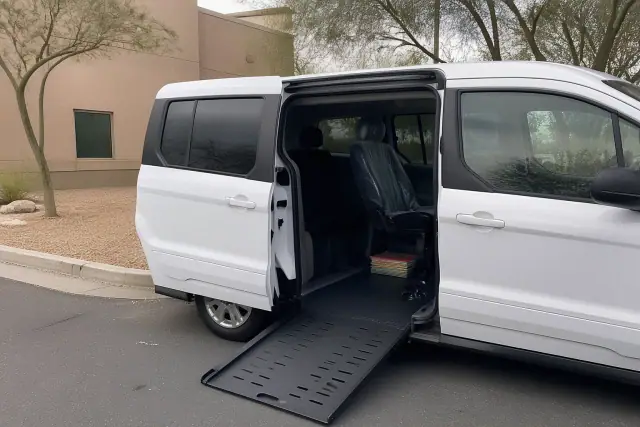
Accessible transport van with a lowered ramp parked at a dialysis clinic in Phoenix, AZ.

We build standing dialysis routes around the clinic chair time and treatment-day pattern. The recurring schedule can run each week without requiring the patient or family to call back before every visit.

Request Estimate

Wheelchair Transportation

Wheelchair securement straps anchored to a vehicle floor at a residential driveway in Phoenix, AZ.

Wheelchair-accessible vans use hydraulic lifts, low-floor entry, and secured tie-down anchor points. Drivers assist with loading and fit the passenger seatbelt separately from the wheelchair restraint before travel.

Request Estimate

Stretcher Transportation

Stretcher loading procedure for dialysis transportation at a curbside in Phoenix, AZ.

Patients who cannot sit upright can travel on a stretcher secured to locking floor mounts. Drivers and attendants use coordinated handling techniques and monitor breathing rate, skin color, and responsiveness during the trip.

Request Estimate

Ambulatory and Senior Transportation

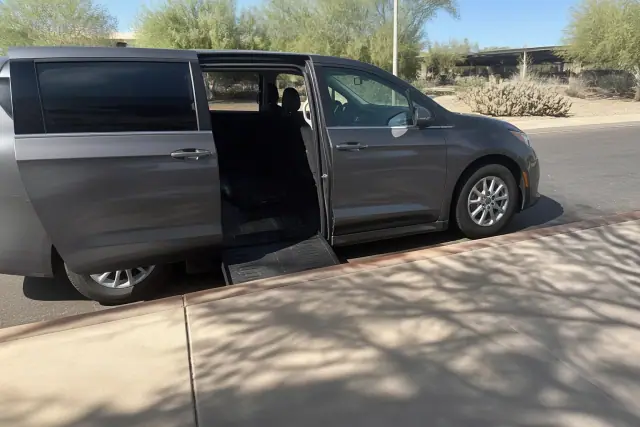
Ambulatory transport van with sliding doors open for boarding on a sunlit curb in Phoenix, AZ.

Ambulatory and senior passengers receive an unhurried pickup with time for balance issues, slower gait, or joint pain. The driver talks through the ride and checks that essential treatment or discharge documents are ready before leaving.

Request Estimate

Hospital Discharge and Appointment Rides

A transport vehicle with open side doors parked by a curb with desert landscaping in Phoenix, AZ.

We provide transportation for hospital discharge, specialist visits, and other scheduled medical appointments. When discharge paperwork runs long or timing changes, we track status with the care team and adjust the pickup rather than relying on the original estimate alone.

Request Estimate

Bariatric and Long-Distance Transport

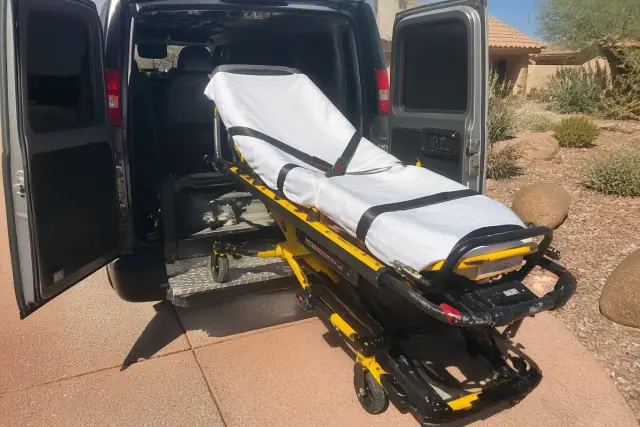
A secured stretcher with safety belts being loaded into a transport van at a residence in Phoenix, AZ.

Bariatric equipment supports larger patients with reinforced ramps, wide-door access, and higher-capacity lifts. For treatment elsewhere in Arizona, long-distance medical transportation can include planned rest stops, added padding, and timing updates for families and care coordinators.

Request Estimate
Transportation Options

Choose the Right Dialysis Ride Option

The right setup depends on whether the passenger can walk safely, remain seated, transfer from a wheelchair, or needs to stay flat. We also account for recurring treatment frequency, door-to-door assistance, patient size, trip distance, and the documentation that must travel with the patient.

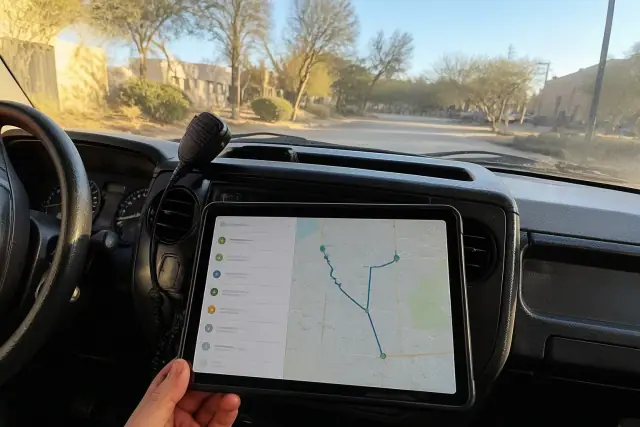
A tablet showing a dialysis transport route map on a vehicle dashboard in Phoenix, AZ with desert views outside.

Recurring Clinic Routes

Recurring dialysis transportation keeps treatment-day planning consistent by matching the route to the facility schedule. We confirm the actual chair time, coordinate with clinic staff, and build travel buffers around Phoenix traffic.

  • Pickup windows confirmed against the clinic chair time
  • Standing weekly schedules for repeat visits
  • Routes serving clinics in Phoenix, Mesa, Tempe, and Glendale
  • Traffic buffers for the 101 and I-17 corridors
  • Clinic coordination for consistent treatment-day arrivals
Request Estimate
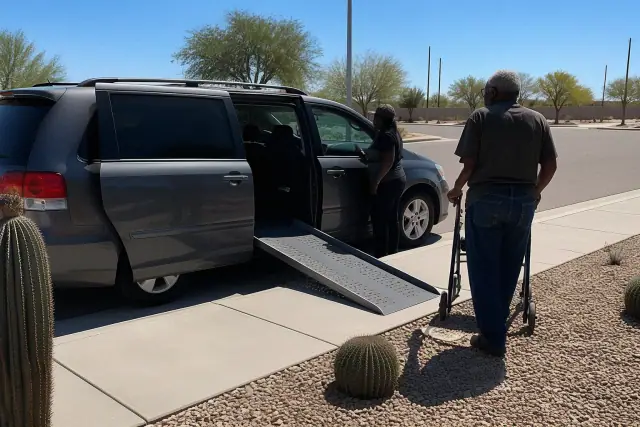
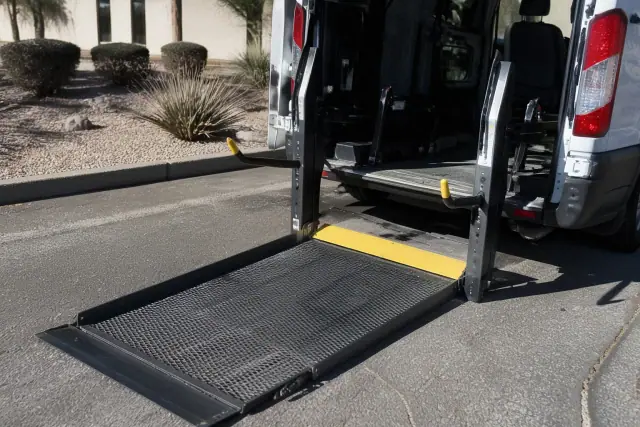
Automated hydraulic lift ramp deployed on a wheelchair-accessible transport vehicle in Phoenix, AZ.

Wheelchair-Accessible Rides

Wheelchair rides are matched to the passenger and mobility equipment before pickup. The accessible setup supports both standard and heavy-duty wheelchairs while keeping the passenger secured independently from the chair.

  • Hydraulic lift access for safer loading
  • Low-floor entry and secured anchor points
  • Four-point wheelchair tie-down system
  • Passenger seatbelt fitted separately from the chair restraint
  • Securement aligned with WC19 transit safety guidance
Request Estimate
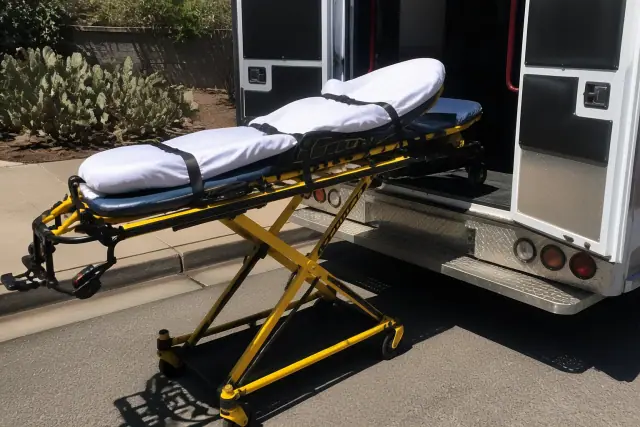
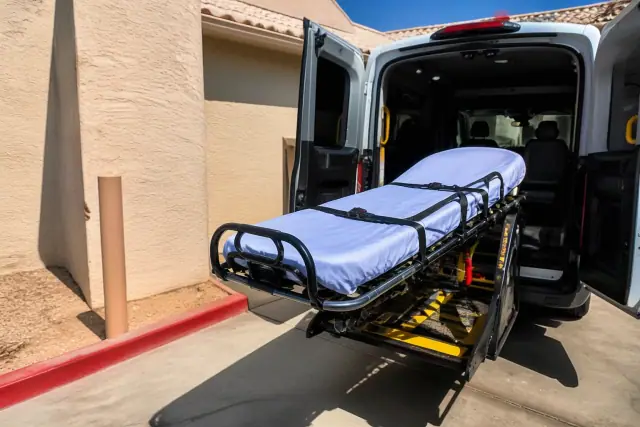
Stretcher secured at the rear of a dialysis transport vehicle during loading in Phoenix, AZ.

Stretcher Support

Stretcher transportation supports a patient who needs to remain flat during the ride. The vehicle and handling plan are selected before pickup so loading, travel, and unloading can be coordinated.

  • Locking floor mounts that stabilize the gurney
  • Checks of breathing rate, skin color, and responsiveness
  • An escalation protocol when a concerning change appears
  • Coordinated lifting during loading and unloading
  • Body-mechanics training for patient and staff safety
Request Estimate
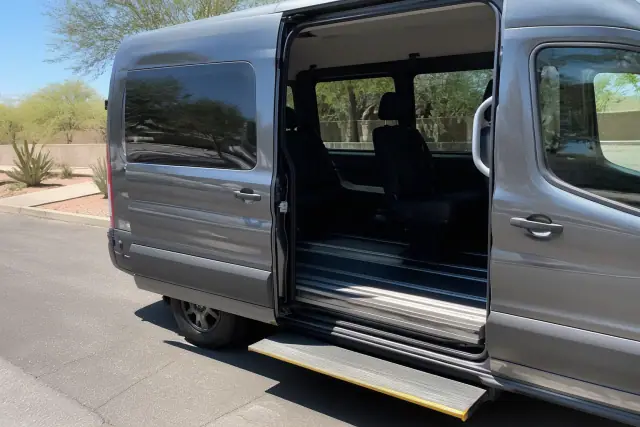
A transport van with an open side door and deployed step for dialysis assistance at a curbside in Phoenix, AZ.

Door-to-Door Assistance

Door-to-door service extends beyond a curbside pickup. The driver comes to the threshold, helps the passenger reach the vehicle, and accompanies the patient to the appropriate facility entrance.

  • In-home threshold pickup rather than curb-only service
  • Assistance walking or rolling to the vehicle
  • Medication list, dialysis card, and paperwork check
  • Guidance to the correct dialysis or hospital entrance
  • Extra pickup time for slower or limited mobility
Request Estimate
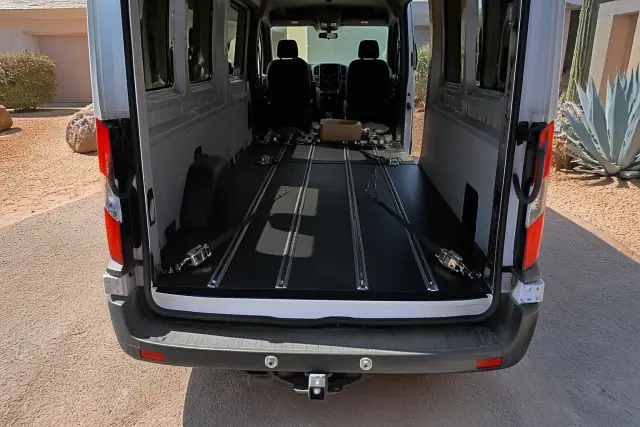
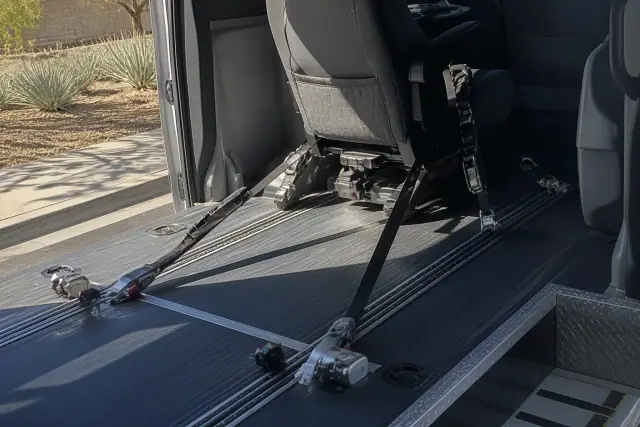
Interior of a dialysis transport vehicle with floor tracking and wheelchair tie-downs in Phoenix, AZ.

Bariatric and Regional Travel

Specialized equipment and a longer-trip plan can address needs that do not fit a standard vehicle. Bariatric and regional transportation are arranged around safe loading, passenger comfort, travel time, and communication.

  • Reinforced ramps, wide doors, and higher-capacity lifts
  • Multi-person loading teams with rated equipment
  • Built-in rest stops for extended journeys
  • Climate control and extra wheelchair or stretcher padding
  • Timing updates and travel-document checks
Request Estimate
Care Built Around the Ride

Why Choose Our Dialysis Transport Approach

Reliable dialysis transportation depends on more than vehicle availability. Our approach combines chair-time scheduling, mobility-matched equipment, trained patient handling, and clear coordination for each scheduled trip.

Chair-Time Scheduling

We treat a dialysis run as a fixed appointment and plan the pickup around the clinic chair time. That gives recurring patients a predictable transportation routine instead of a new scramble on every treatment day.

Purpose-Matched Vehicles

Vehicle assignments reflect how the passenger travels, whether ambulatory, in a wheelchair, on a stretcher, or with bariatric equipment. Climate control and secure anchor points support comfort and stability along the route.

Trained, Privacy-Conscious Staff

Drivers complete defensive-driving and hands-on patient-handling training before transporting passengers. They are also trained around dialysis-related symptoms, while ride conversations and records are kept HIPAA compliant.

Common Ride Barriers

Dialysis Transportation Challenges We Address

A dialysis ride can break down because of missed pickups, heat exposure, post-treatment symptoms, mobility limitations, changing discharge times, or distance to specialty care. Scheduling the right vehicle and assistance level helps address those barriers before treatment day.

Discuss Your Ride

Missed Treatment Risk

When a dialysis ride falls through, fluid and toxins can build up in the bloodstream. A missed session can lead to serious complications and an emergency-room visit, making a dependable recurring route especially important.

Extreme Heat Exposure

Waiting outside for a late ride can be dangerous during a Phoenix summer. Pickup windows, route planning, climate control, and door assistance reduce time spent standing or sitting in the heat.

Post-Treatment Symptoms

Patients may leave dialysis fatigued, dizzy, lightheaded, or dealing with low blood pressure. A gentle, unhurried ride lets the driver check in and respond according to the transport escalation protocol.

Limited Mobility

Balance problems, joint pain, wheelchair use, or the inability to sit upright can make an ordinary vehicle unsafe. Matching the passenger with ambulatory assistance, a lift-equipped van, or stretcher support avoids an improvised transfer.

Changing Discharge Times

Hospital discharge timing can shift as paperwork and care-team steps take longer than expected. Tracking the discharge status allows the pickup plan to move with the actual release time.

Distant Specialty Care

Transplant workups, dialysis access procedures, and second-opinion consultations may require travel beyond Phoenix. A regional ride plan accounts for rest stops, comfort, documents, and timing updates over the longer journey.

How It Works

Our Dialysis Transportation Process

Booking begins by phone or online request. From there, we confirm the care schedule, select the vehicle, brief the driver, plan the pickup, assist the passenger, and coordinate the completed trip.

01.

Request the Ride

Share the appointment date, pickup point, facility, mobility needs, and whether the trip is one-time, same-day, or recurring. These details establish the transportation plan.

02.

Confirm Care Details

We confirm the clinic chair time and identify any dialysis card, referral, discharge, AHCCCS, Medicare, or private-pay details needed for the trip. Patients should still verify coverage with their specific plan.

03.

Match the Vehicle

The vehicle is assigned for ambulatory, wheelchair, stretcher, or bariatric travel. The team also accounts for securement, seating, climate control, and the assistance needed at pickup and arrival.

04.

Plan the Route

Pickup windows are built around the actual appointment and Phoenix traffic patterns. Route buffers help the patient arrive without being rushed or left waiting outside in extreme heat.

05.

Assist Door to Door

The driver comes to the door, confirms the patient has essential paperwork and medication information, and assists with the walk, wheelchair roll, or stretcher loading. At the facility, the patient is guided to the correct entrance.

06.

Complete and Repeat

The return trip is coordinated around treatment or discharge timing. For ongoing dialysis, the route can continue on a standing weekly schedule, while longer trips include timing updates for family or care coordinators.

Plan Your Treatment Ride

Schedule Your
Dialysis
Transportation

Tell us the clinic chair time, pickup location, mobility needs, and whether you need a single trip or a recurring route. We will coordinate the schedule and vehicle assignment for your Phoenix dialysis transportation.

Dialysis Ride Help

Dialysis Transportation FAQs

These answers cover recurring schedules, mobility equipment, payment coordination, door-to-door help, and treatment-day planning for dialysis transportation in Phoenix. Call if your trip requires a specific vehicle or assistance level.

Call to Schedule

Medicare can cover non-emergency transportation to dialysis in limited circumstances, typically when a physician documents medical necessity and no other means of travel is safe. Rules vary between Original Medicare and Medicare Advantage plans, so check with the specific plan before assuming the ride is fully covered.

The ride should be gentle, unhurried, and matched to the patient's mobility after treatment. Stable cushioned seating, climate control, and a driver trained to recognize fatigue, dizziness, and low blood pressure are important, while a patient who cannot transfer safely may need wheelchair or stretcher transportation.

A standing route is built around the clinic chair time and the patient's regular treatment days. Once scheduled, it can repeat weekly without the family having to arrange every trip again.

We coordinate with AHCCCS medical transportation authorizations and help identify the trip details needed for scheduling. Coverage and authorization requirements depend on the patient's circumstances, so the applicable program or plan should confirm eligibility.

Trips can be arranged for ambulatory, wheelchair, stretcher, or bariatric passengers. The appropriate vehicle depends on whether the patient can walk, transfer, remain seated, or needs to stay flat during travel.

Same-day trips can be requested, along with scheduled and recurring rides. Vehicle availability and the passenger's mobility needs must be coordinated for the specific trip.

Door-to-door service means the driver comes to the home threshold, assists the passenger to the vehicle, and walks or rolls the patient to the correct facility entrance. This is more support than a curb-only pickup.

The wheelchair is locked into a four-point tie-down system before the vehicle moves. A passenger seatbelt is fitted separately from the chair restraint, following the securement approach described in WC19 transit safety guidance.

Stretcher transportation is available when a patient cannot sit upright safely for the ride. The stretcher is secured to locking floor mounts, and trained staff use coordinated techniques for loading and unloading.

Service is available throughout Phoenix and the surrounding communities of Scottsdale, Mesa, Tempe, Chandler, Glendale, Peoria, and Ahwatukee. Regional transportation can also be arranged for treatment centers elsewhere in Arizona.

Patients should have the documents needed for the visit, such as a medication list, dialysis card, referral forms, discharge paperwork, or insurance information. The driver checks that these essentials are ready before leaving when applicable.

Yes. The service includes hospital discharge transportation, specialist and medical appointment rides, and dialysis transportation. For a discharge, pickup timing can be adjusted as the care team completes the release process.

Pickup windows are based on the clinic chair time and include travel buffers for Phoenix traffic patterns. Climate-controlled vehicles and door-to-door assistance also reduce the time a patient spends waiting outside in extreme heat.