Proudly serving Phoenix, Mesa, Glendale, Scottsdale, Tempe, Chandler & surrounding areasCall or Text 24/7: 602-449-8153
Aerial view of Phoenix, AZ, showing desert foothills, saguaro cacti, and residential neighborhoods at sunset.

Stretcher Transportation in Phoenix, AZ: Lying-Flat Medical Travel & Secure Cot Transfers

Phoenix Non Emergency Medical Transport provides non-emergency stretcher transportation in Phoenix for patients who need to remain lying flat. Our services also include wheelchair, ambulatory, bariatric, dialysis, medical appointment, hospital discharge, senior, door-to-door, and long-distance medical transportation across the Valley. Stretcher-equipped vans use hospital-grade cot fasteners, four-point wheel locks, and trained attendants for secure patient movement. We coordinate rides for private-pay families, AHCCCS-approved referrals, and Valley discharge planners.

Serving more than 1.6 million residents across Phoenix's 517.9 square miles can mean long travel through stop-and-go freeway traffic. Patients with spinal injuries, post-surgical incisions, fresh casts, pressure wounds, or respiratory needs may not be able to sit upright safely. A secured cot, trained lift assistance, and independent patient-compartment climate control make those trips safer and more comfortable. We confirm mobility, equipment, destination, and timing before dispatch so the right vehicle and crew arrive.

Trip records, arrival confirmations, and coordination with family or facility staff help keep each pickup and handoff clear.

Phoenix Non Emergency Medical Transport provides stretcher transportation from Phoenix to Mesa, Scottsdale, Tempe, Glendale, and Chandler.

★ ★ ★ ★ ★4.9/5 Average Rating · 20+ Years of Experience · Thousands of Customers Helped · Licensed & Insured · Patients, Families & Care Teams

Stretcher Transportation Options & Benefits

What Is Stretcher Transportation?

Stretcher transportation is a non-emergency ride in which the patient remains lying flat on a secured medical cot instead of sitting in a wheelchair or car seat. It is intended for people who cannot sit upright safely or transfer with minor assistance.

A hydraulic or manual-load cot locks into a floor-mounted bracket designed to keep the patient-and-cot combination stable through turns, braking, and traffic on I-10 and Loop 202. Adjustable incline can also help patients with respiratory needs or reflux concerns remain more comfortable in transit.

Two trained attendants handle loading and unloading on every stretcher trip. Requests are assessed by phone before dispatch to match the patient's positioning, oxygen needs, stretcher width, and staffing requirements with the correct vehicle.

Benefits of Non-Emergency Stretcher Transport

Purpose-built stretcher transport combines patient positioning, securement, trained handling, and coordinated handoffs for trips that do not require an emergency ambulance.

  • Remain reclined on an adjustable medical cot
  • Floor-mounted fasteners with four-point cot restraints
  • Two-attendant loading and unloading assistance
  • Oxygen tank mounts and onboard oxygen provisions
  • Independent climate control in the patient compartment
  • Door-to-door transfer support and safe handoff
  • HIPAA-compliant pickup and drop-off documentation
  • Pre-trip safety checks and disinfection between patients
Patient-Focused Medical Transport

Phoenix Stretcher Transportation Services

Mobility, positioning, destination, and medical equipment needs determine which transport service fits a patient. The available options support non-ambulatory patients, wheelchair users, seniors, recurring clinic visits, hospital discharges, and bariatric transfers.

Non-Emergency Stretcher Transportation

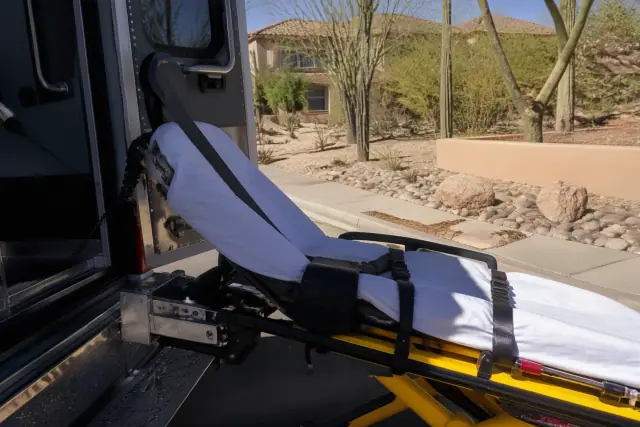
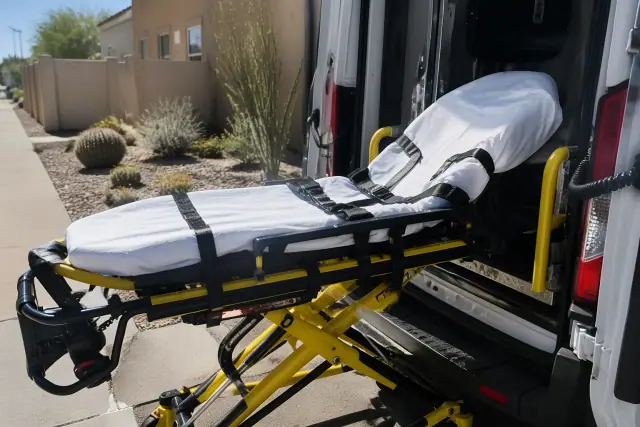
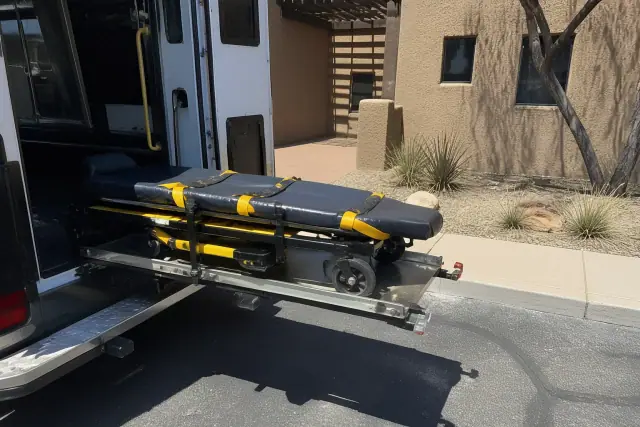
A stretcher secured at the rear of a transport vehicle during loading in Phoenix, AZ.

Patients remain flat or inclined on a secured cot for the full trip. Trained attendants manage the transfer, cot loading, restraint check, transport, and destination handoff without presenting the ride as a replacement for emergency ambulance care.

Request Estimate

Wheelchair Transportation

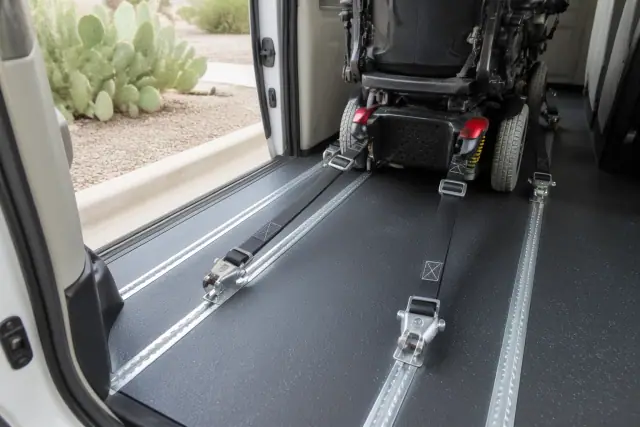
Wheelchair tie-down straps secured to a mobility device in a transport vehicle in Phoenix, AZ.

Lift-equipped wheelchair-accessible vans serve patients who can remain seated safely. Hydraulic lifts accommodate standard and bariatric wheelchairs, while non-slip flooring, grab rails, and securement systems support a stable ride.

Request Estimate

Bariatric Transportation

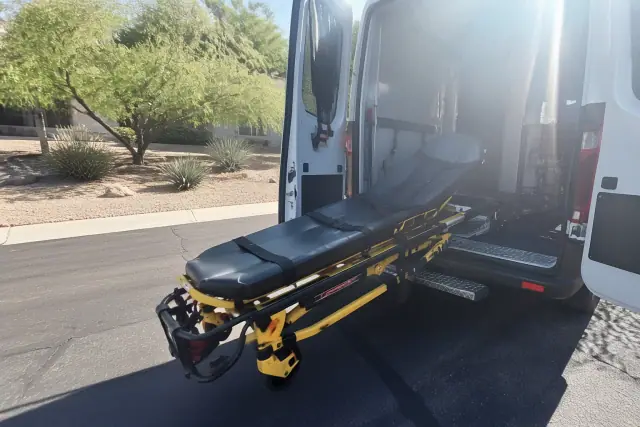
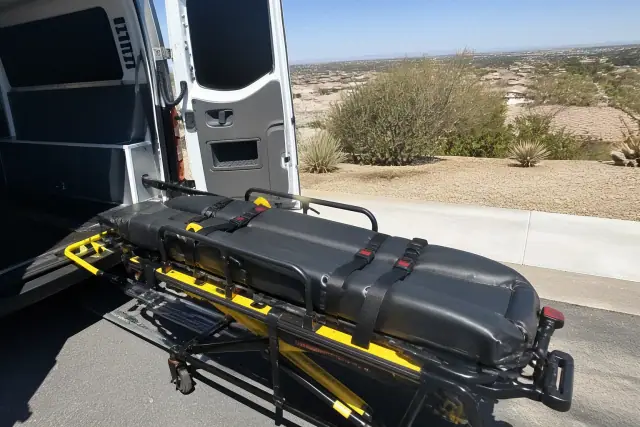
Bariatric stretcher with safety straps secured at the rear of a vehicle on a xeriscaped street in Phoenix, AZ.

Bariatric trips use reinforced equipment and staffing matched to the patient's weight, positioning, and transfer needs. The phone assessment determines whether a bariatric wheelchair or stretcher setup is appropriate before a crew is dispatched.

Request Estimate

Dialysis Transportation

Stretcher secured in a medical transport vehicle during a dialysis pickup in Phoenix, AZ.

Recurring dialysis transportation coordinates pickup windows with clinic appointment times, often for patients traveling three times a week. Standing weekly bookings help reduce waiting before or after treatment and keep the schedule consistent.

Request Estimate

Hospital Discharge Transportation

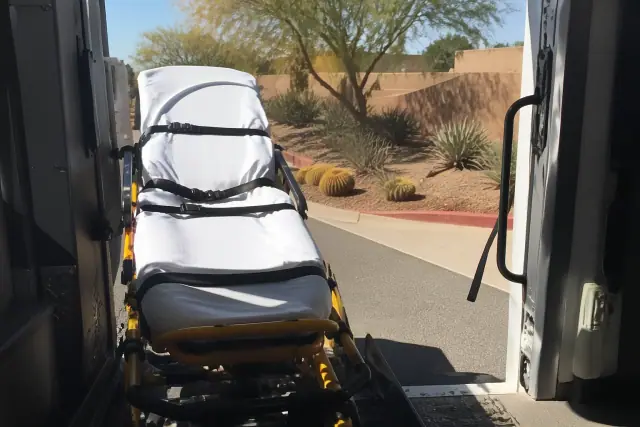
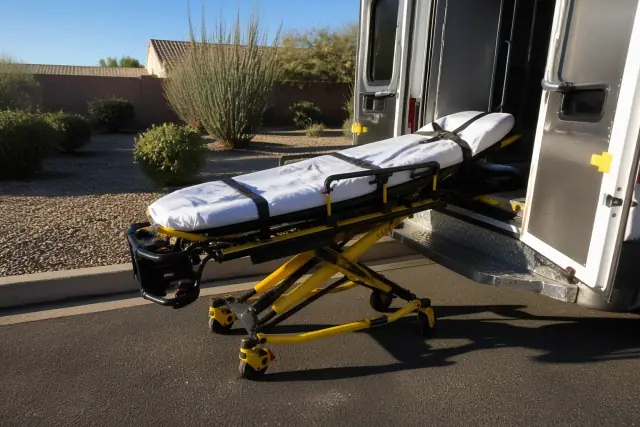
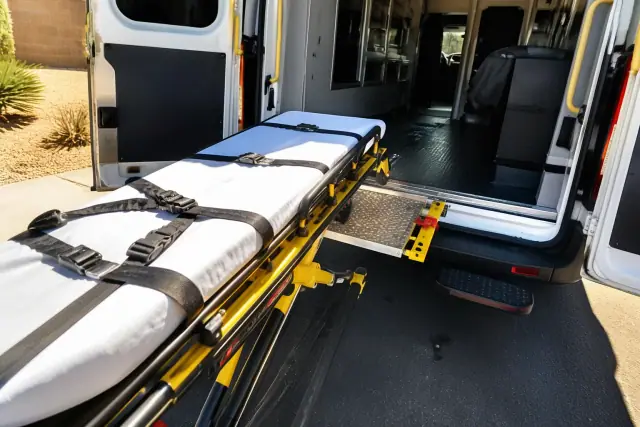
Stretcher secured at the rear doors of a transport vehicle during a hospital discharge in Phoenix, AZ.

Hospital discharge rides move patients from a Valley hospital to home, assisted living, or a skilled nursing facility. Dispatch coordinates the vehicle, crew, pickup window, equipment, and receiving-party handoff with discharge planners and families.

Request Estimate

Senior Medical Transportation

Stretcher secured at the rear doors of a medical transport vehicle in a Phoenix, AZ desert landscape.

Senior transport accounts for balance limitations, osteoporosis, dementia, hearing loss, walkers, and recovery after a fall. Attendants explain each transfer step, provide lift assistance, and remain with the patient until a safe handoff.

Request Estimate
Transport Options

Medical Transportation for Different Needs

The appropriate ride depends on whether the patient can sit upright, transfer with assistance, remain safely positioned, and travel with required equipment. These service groupings help families and care teams describe the trip accurately when scheduling.

Stretcher secured at the rear of a transport van during a loading procedure in Phoenix, AZ.

Stretcher Van Transport

Stretcher vans are configured for patients who need to remain supine or reclined from pickup through drop-off.

  • Adjustable cot height and incline
  • Locking floor tracks and cot fasteners
  • Patient restraints checked before travel
  • Patient-compartment climate control
  • Oxygen mounts and backup supply
Request Estimate
Wheelchair and stretcher securement station with tie-down straps in a transport vehicle in Phoenix, AZ.

Wheelchair and Ambulatory Transport

Seated and ambulatory options serve patients who can remain upright and need a lift, ramp, walker support, or minor transfer assistance.

  • Hydraulic wheelchair lifts
  • Standard and bariatric wheelchair access
  • Non-slip flooring and grab rails
  • Assistance for walkers and limited mobility
  • Secure seated positioning during travel
Request Estimate
A medical stretcher secured at the rear of a transport vehicle for a dialysis appointment in Phoenix, AZ.

Medical Appointment and Dialysis Trips

Scheduled medical transport supports specialist visits, therapy, dialysis, and other recurring care where arrival timing matters.

  • Pickup windows tied to appointment times
  • Coordination with dialysis clinic staff
  • Standing weekly bookings for recurring care
  • Planned return-trip timing
  • Vehicle and staffing matched before dispatch
Request Estimate
Stretcher secured in a transport vehicle for a medical transfer in Phoenix, AZ.

Hospital, Facility, and Senior Transfers

Facility transfers connect hospitals, homes, skilled nursing facilities, assisted living communities, and clinics with a documented patient handoff.

  • Hospital-to-home discharge rides
  • Transfers to skilled nursing facilities
  • Nursing home and assisted living pickups
  • Clear communication for senior patients
  • Arrival updates for families and facility staff
Request Estimate
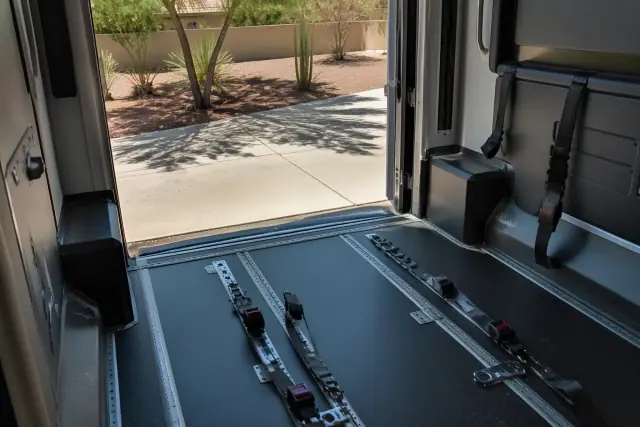
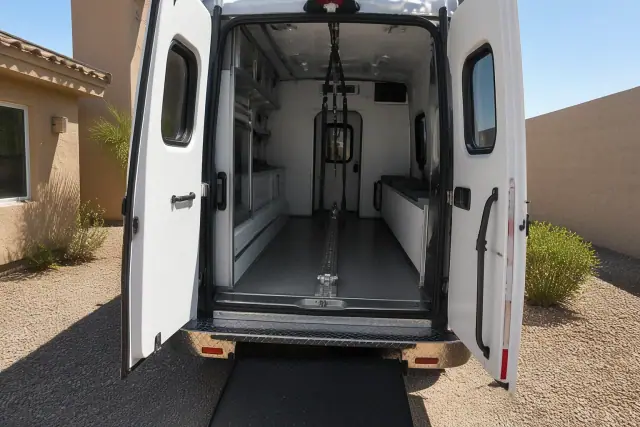
Medical transit vehicle interior showing mechanical floor tracks and safety straps in Phoenix, AZ.

Door-to-Door and Long-Distance Transport

Door-to-door and long-distance services extend support beyond the vehicle, from the patient's door to a receiving person at the destination.

  • Attendants meet the patient at the door
  • Lift assistance during the transfer
  • Routes planned across the Valley
  • Distance included in the upfront quote
  • Handoff at a clinic, facility, or home
Request Estimate
Match Mobility to Equipment

Choosing the Right Stretcher Transport Approach

Dispatch asks whether the patient can sit upright, bear weight, transfer with minor assistance, or must remain reclined. Oxygen needs, stretcher width, bariatric equipment, pickup access, destination, and appointment timing then determine the vehicle and staffing plan.

Two-Attendant Stretcher Crews

Stretcher attendants train in safe patient handling, body mechanics, cot loading, defensive driving, and HIPAA privacy requirements. Crew members also maintain current CPR and first-aid certification.

Purpose-Built Safety Equipment

Stretcher vehicles combine locking floor tracks, adjustable cots, restraint hardware, oxygen mounts, pulse oximeters, first-aid kits, non-slip flooring, and real-time communication with dispatch.

Coordinated, Documented Trips

Families and facility staff receive a scheduled pickup window and arrival confirmation. Pickup time, drop-off time, and relevant patient notes are kept under HIPAA-compliant data-handling procedures for a clear trip record.

What Sets Our Transport Apart

Why Choose Us for Phoenix Stretcher Transportation?

Each trip starts with a mobility and equipment assessment, continues through a vehicle pre-trip check, and ends with a documented handoff. Route planning accounts for Valley congestion, while cleaning between transports focuses on cot surfaces, wheelchair contact points, and grab rails.

Request a Trip Quote

Unable to Sit Upright

Some patients cannot tolerate a wheelchair or car seat because they must remain flat or reclined. A secured adjustable cot supports that position throughout the ride.

Post-Surgical Positioning Needs

A fresh incision, abdominal surgery, or weight-bearing restriction can make seated travel and ordinary vehicle transfers unsafe. Stretcher positioning and trained handling reduce unnecessary movement.

Spinal and Orthopedic Restrictions

Spinal cord injuries, recent orthopedic procedures, and fresh casts require careful body mechanics during transfer. The crew selects a positioning and securement approach that avoids aggravating the affected area.

Respiratory Support During Transit

Patients with severe respiratory conditions may travel with supplemental oxygen provisions and an inclined cot. This remains non-emergency transportation; a developing medical emergency requires 911 response.

Bariatric Transfer Requirements

Patient weight, cot width, positioning, and lift assistance can make a standard wheelchair transfer unsuitable. Bariatric requests are screened before dispatch so reinforced equipment and the needed staffing arrive.

Heat and Long Phoenix Routes

Phoenix can stay above 110 degrees for weeks, while summer pavement temperatures routinely exceed 150 degrees. Independent patient-compartment climate control helps protect a patient who cannot reposition or regulate body temperature easily during longer Valley trips.

How It Works

Our Stretcher Transportation Process

The booking process identifies the patient's mobility, equipment, coverage, timing, and destination needs before a vehicle leaves the lot. Each step is designed to prevent mismatched equipment, rushed transfers, and unclear handoffs.

01.

Confirm Trip Details

Call with the pickup and destination addresses, appointment time, mobility level, and equipment needs such as oxygen or a specific stretcher width.

02.

Assess Mobility and Staffing

Dispatch determines whether the patient can sit, transfer, bear weight, or must remain reclined, then assigns the appropriate vehicle and stretcher crew.

03.

Verify Coverage or Quote

Eligible AHCCCS trips may require prior authorization through the member's health plan. Private insurance coverage varies, and private-pay patients receive a clear quote based on distance, staffing, transport type, and time of day.

04.

Schedule and Plan the Route

Routine stretcher transportation is best scheduled 24-48 hours ahead, while same-day hospital discharge rides depend on available vehicles and attendants. Dispatch builds in time for morning congestion on I-17 and afternoon backups near Sky Harbor.

05.

Prepare the Vehicle and Equipment

Before departure, the crew checks the cot, fasteners, restraints, oxygen provisions, communication equipment, flooring, and patient-compartment climate control.

06.

Load, Secure, and Transport

Attendants meet the patient at the door, explain the transfer, position the cot, lock it into the floor bracket, check restraints, and monitor the ride to the destination.

Plan a Safe Ride

Schedule Phoenix
Stretcher
Transportation

Share the patient's mobility, positioning, pickup, destination, equipment, and timing needs to arrange the right non-emergency vehicle and crew. A clear quote is provided before a private-pay trip is booked.

Stretcher Transport Help

Phoenix Stretcher Transportation FAQs

These answers cover eligibility, scheduling, equipment, costs, coverage, and the differences between stretcher and wheelchair transportation in Phoenix.

Call About a Stretcher Ride

Original Medicare generally does not cover non-emergency stretcher or wheelchair van transportation; ambulance coverage is limited to emergencies or specific medically necessary conditions. Some Medicare Advantage plans include a supplemental non-emergency transportation benefit, so check the plan documents or call member services before booking.

The right option depends on mobility. A senior who can walk with minor assistance may use an ambulatory vehicle, a wheelchair user needs a lift-equipped van, and someone who cannot sit upright safely needs stretcher transportation. A phone assessment matches the vehicle and assistance level to the patient.

A stretcher ride is non-emergency transportation in which the patient remains lying flat or inclined on a medical cot for the entire trip. The cot locks into a floor-mounted bracket, and trained attendants handle loading, securement, unloading, and handoff.

Across the Arizona market, a non-emergency stretcher trip typically costs $300 to $525 one way, or roughly $5 to $12 per mile, with an average one-way cost near $412. Team-assisted stretcher service often runs $100-$200 on weekdays, $125-$225 during evenings and weekends, and $150-$250 on holidays. A private-pay quote is based on mileage, staffing, transport type, and time of day.

AHCCCS covers non-emergency medical transportation for eligible members traveling to a covered medical service when no other transportation is available. Most trips require prior authorization through the member's health plan, so have the AHCCCS ID and plan information ready when scheduling.

Routine stretcher trips are best booked 24-48 hours ahead to reserve an equipped vehicle and crew. Same-day medical transport may be available for a hospital discharge when vehicle and attendant capacity allows. Recurring dialysis or therapy trips can be arranged as standing weekly bookings.

Wheelchair transportation is for a patient who can sit upright safely and use a ramp or lift-equipped van. Stretcher transportation is for a patient who must remain reclined and needs a secured cot plus trained lift assistance. Dispatch reviews mobility before assigning a vehicle.

Yes. Recurring bookings coordinate pickup windows with the dialysis clinic's schedule so the patient is not waiting longer than necessary before or after treatment. A standing weekly schedule can provide consistency for ongoing care.

Provide the pickup address, destination, appointment time, mobility level, and any equipment needs. Dispatch may also ask about oxygen, stretcher width, bariatric needs, transfer access, and the person receiving the patient at the destination.

Stretcher vans use adjustable cots, locking floor tracks, restraint hardware, oxygen tank mounts, non-slip flooring, and communication equipment linked to dispatch. Vehicles also carry backup oxygen, pulse oximeters, and first-aid kits and undergo a pre-trip safety check.

Supplemental oxygen needs are reviewed during scheduling so the correct provisions and mounting equipment are prepared. An inclined cot may help some patients with respiratory conditions remain more comfortable. Non-emergency transport does not replace 911 care for an active or developing emergency.

Dispatch confirms the discharge pickup window, patient mobility, equipment, destination, and receiving contact. Attendants assist from the hospital or facility, remain with the patient through transport, and complete a safe handoff at home, assisted living, or a skilled nursing facility.

Phoenix Non Emergency Medical Transport provides stretcher, wheelchair, and senior medical transportation throughout Phoenix, Mesa, Scottsdale, Tempe, Glendale, and Chandler. Route planning accounts for travel across the Valley and the patient's appointment timing.