Proudly serving Phoenix, Mesa, Glendale, Scottsdale, Tempe, Chandler & surrounding areasCall or Text 24/7: 602-449-8153
Aerial view of Phoenix, AZ, showing desert foothills, saguaro cacti, and residential neighborhoods at sunset.

Medical Transport in Mesa, AZ: Wheelchair, Stretcher & Bariatric Mobility

Phoenix Non Emergency Medical Transport provides wheelchair, stretcher, ambulatory, bariatric, dialysis, and medical appointment transportation for patients throughout Mesa and the greater Phoenix metro area. We also coordinate hospital discharge, senior, door-to-door, and long-distance medical transportation. Our fleet matches each ride to the patient's mobility level, from ambulatory sedan service to wheelchair vans, stretcher vehicles, and reinforced bariatric equipment. Call us to schedule a dependable non-emergency medical ride.

Mesa covers more than 138 square miles, so recurring dialysis or a hospital discharge can quickly strain a family's time and transportation options. Local routes stretch from Dobson Ranch and Downtown Mesa to Eastmark, Las Sendas, and Red Mountain. Summer heat makes long outdoor waits especially difficult for seniors and people with limited mobility. Scheduled and recurring routes follow appointment times instead of a fixed transit timetable.

Mesa's 504,258 residents make it Arizona's third-most populous city, and daily routes connect retirement communities, medical campuses, and neighborhoods across the East Valley.

★ ★ ★ ★ ★4.9/5 Average Rating - 20+ Years of Experience - Thousands of Customers Helped - Licensed & Insured - Patients, Families & Care Teams
Mesa Transportation Options

Medical Transportation Services in Mesa, AZ

Mesa patients can choose transportation matched to a wheelchair, stretcher, ambulatory, bariatric, recurring dialysis, discharge, senior, or long-distance need. Wheelchair and stretcher vehicles support passengers who require specialized securement, while ambulatory rides are designed for people who need minimal assistance. Families coordinating care elsewhere in the Valley can also review the Glendale, AZ service-area page.

Wheelchair Transportation
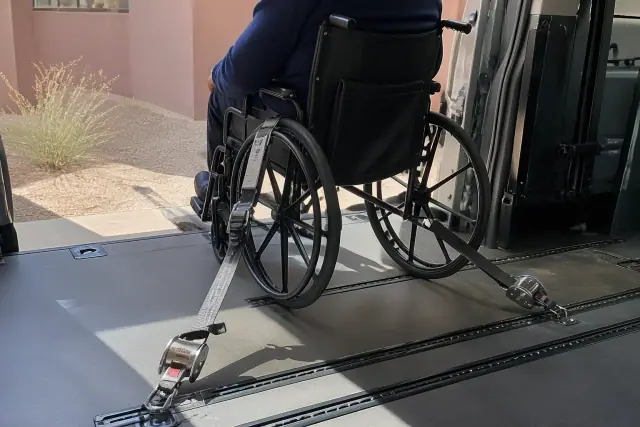
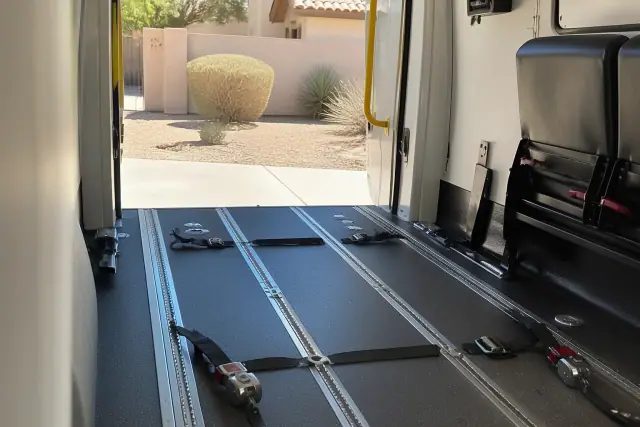
Wheelchair secured with four-point tie-down straps inside a medical transport van in Mesa, AZ.

Wheelchair vans use hydraulic lifts, four-point tie-down restraint systems, and securement anchors rated to Society of Automotive Engineers J2249 standards. Drivers trained in transfer techniques help patients move from home to the vehicle without rushing.

Explore Service
Stretcher Transportation

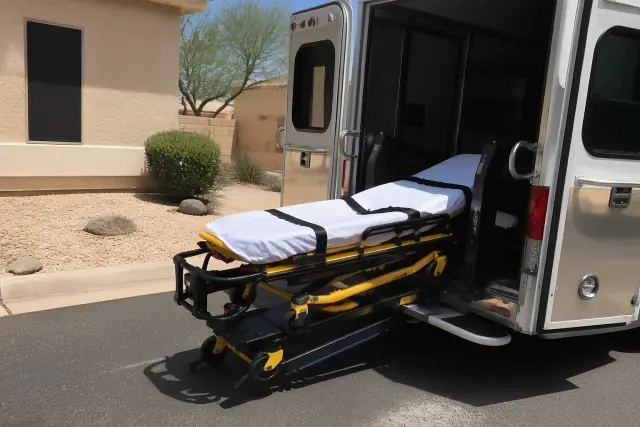
Stretcher secured at the back of a medical transport vehicle during loading in Mesa, AZ.

Stretcher-equipped vehicles serve patients who cannot sit upright. Gurneys use federal motor vehicle safety-rated mounts, and crews plan transfers around IV lines, oxygen tanks, and monitoring equipment for trips between hospitals, skilled nursing facilities, and home.

Explore Service

Ambulatory Transportation

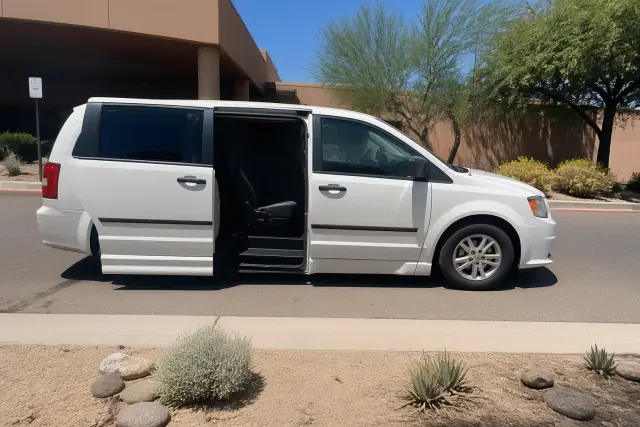
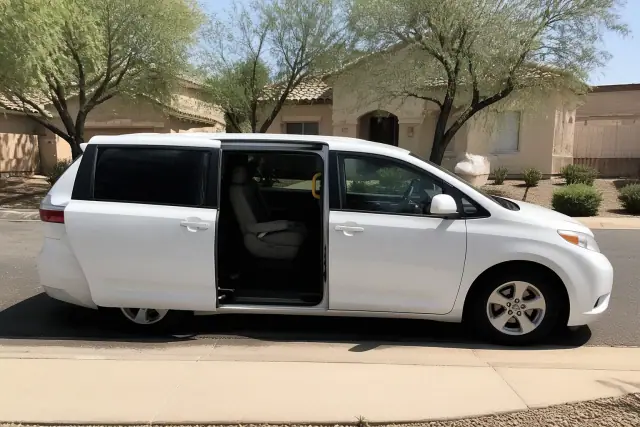
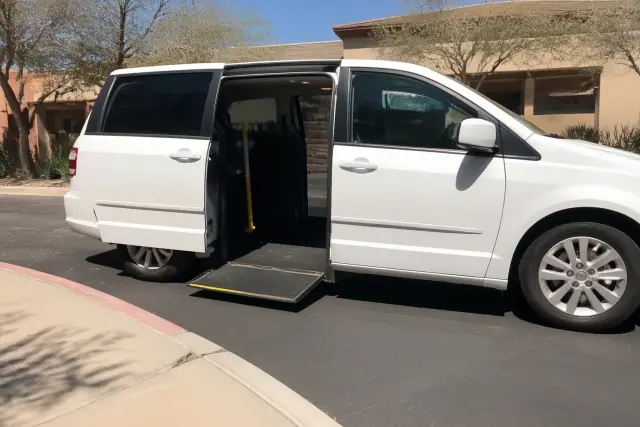
Ambulatory medical transport vehicle with open sliding doors parked on the curb in Mesa, AZ.

Ambulatory transportation provides a comfortable sedan or van ride for patients who walk with minimal assistance. Door-to-door support adds a steady hand without assigning wheelchair or stretcher equipment the patient does not need.

Explore Service

Bariatric Transportation

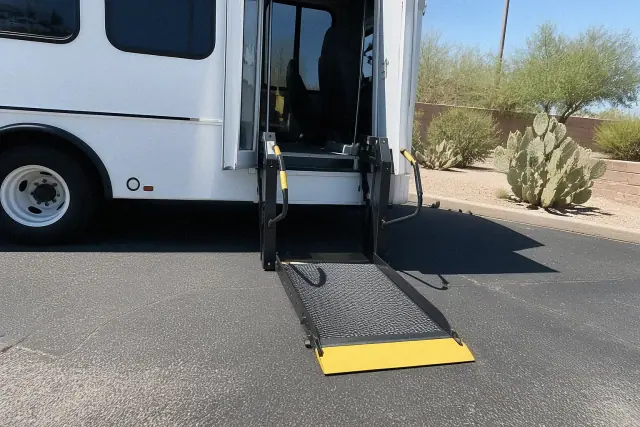
Automated hydraulic lift ramp deployed for bariatric medical transport on asphalt in Mesa, AZ with desert landscaping.

Bariatric vehicles use reinforced ramps, wide-body lifts, and heavy-duty securement systems rated beyond standard wheelchair capacity. Matching the vehicle to the patient avoids improvising with equipment that was not built for the load.

Dialysis Transportation

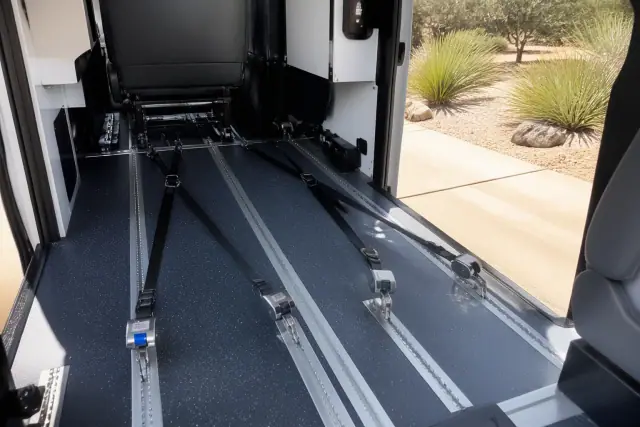
Wheelchair securement station with four-point tie-down straps inside a medical transport van in Mesa, AZ.

Dialysis patients often need three round trips a week for an extended treatment schedule. Standing routes coordinate repeat pickups with the treatment center so patients do not have to rebuild the ride plan before every session.

Medical Appointment Transportation

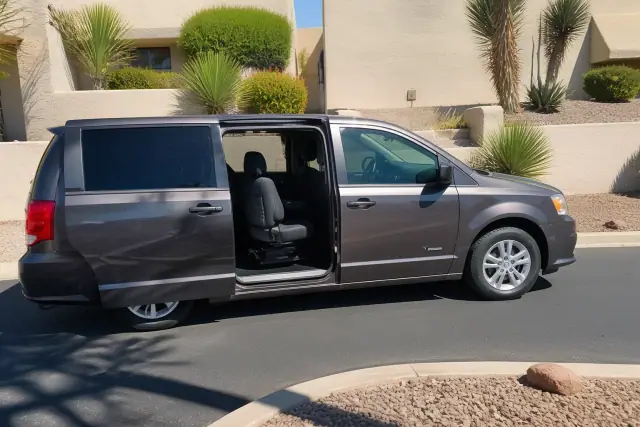
Medical transport van with side doors open for curbside passenger boarding at a house in Mesa, AZ.

Medical appointment rides are scheduled around the destination, appointment time, and mobility level. Reliable transportation matters because missed slots tied to transportation gaps cost providers a national average of $200 to $265 per appointment.

Hospital Discharge Transportation

Medical transport vehicle with open side doors at a curbside pickup location in Mesa, AZ.

Hospital discharge transportation helps when a patient is cleared at 2 p.m. on a weekday and family cannot leave work immediately. The team coordinates with Mesa-area discharge planners for rides home, to a skilled nursing facility, or to a family member's house.

Senior Medical Transportation

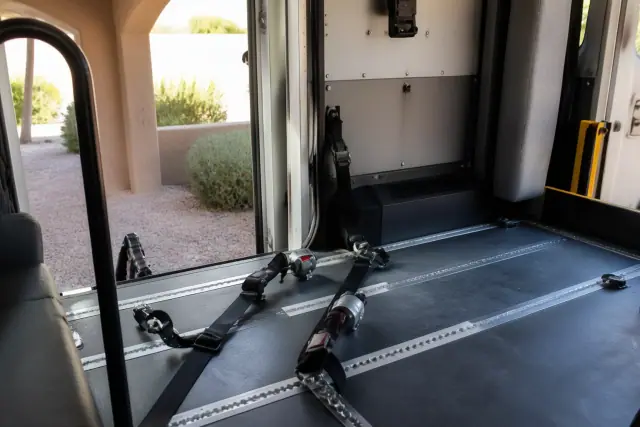
Wheelchair securement station with floor tracking and tie-down straps in a medical transport van in Mesa, AZ.

Senior medical transportation allows time for careful transfers, clear communication, and an unrushed pace. Rides can support routine primary care, specialist visits, and post-surgical follow-ups while coordinating instructions with family caregivers or home health aides.

Door-to-Door Medical Transportation

Medical transport van with side doors open for curbside passenger assistance at a home in Mesa, AZ.

Door-to-door service can include assistance from inside the pickup location to the vehicle and back inside at the destination. It is designed for patients who live alone or whose mobility makes a curbside-only ride difficult.

Long Distance Medical Transportation

Wheelchair securement station with four-point tie-down straps installed in a transport vehicle in Mesa, AZ.

Long-distance transportation connects Mesa patients with specialists in Tucson, transplant care in Phoenix, and rehabilitation facilities out of state. Planning can include rest stops, condition checks, receiving-facility timing, and a second staff member when a stretcher or bariatric case requires one.

Match the Ride

Choosing the Right Medical Ride in Mesa

The right vehicle depends on how the patient moves, transfers, and sits during travel, plus any equipment that must remain with them. We confirm mobility level, chair type, assistance needs, destination, timing, and trip distance before dispatch so the assigned vehicle and crew fit the ride.

Ambulatory, Wheelchair, or Stretcher

A patient who walks with minimal help may only need an ambulatory vehicle, while a wheelchair user requires lift and securement capacity. A patient who cannot sit upright needs a stretcher-equipped vehicle and the staffing appropriate to that transfer.

Manual or Power Wheelchair

Manual and power chairs can require different lift capacities and securement points. Sharing the chair type during booking helps dispatch confirm that the selected van can load and secure it correctly.

Bariatric Equipment Needs

Patients whose mobility equipment exceeds standard capacity need reinforced ramps, wide-body lifts, and heavy-duty securement. Confirming this need before pickup keeps the transfer dignified and avoids assigning undersized equipment.

Door-to-Door Assistance

Some passengers need more than curb-to-curb transportation. Tell the scheduler whether help is needed inside the pickup location, during the transfer, or at the destination so that support is included in the ride plan.

Recurring Treatment Schedule

Dialysis and other repeat treatments benefit from standing routes with predictable pickup windows. Consistent scheduling can also make it possible for the same or a familiar driver to handle recurring appointments.

Local or Long-Distance Trip

A local appointment ride and a multi-hour specialist trip require different route, comfort, and staffing plans. Mileage, vehicle time, rest stops, medical stability, and destination coordination all shape a long-distance booking.

Mesa Transportation Barriers

Common Medical Ride Challenges in Mesa

Transportation gaps can affect appointments even when care is close to home. Nationally, about 6 percent of adults report missing medical care because reliable transportation was unavailable; mobility limitations, rigid schedules, extreme heat, and equipment needs can make those barriers harder in Mesa.

Schedule a Medical Ride

Missed Appointment Risk

A late or unavailable ride can become a missed treatment, lost work time for a caregiver, and an unused appointment slot. Scheduling around the actual appointment time gives the route a clear arrival target.

Dialysis Schedule Strain

Frequent dialysis trips can overwhelm relatives who are balancing work and caregiving. A recurring route keeps the pickup, treatment center, and return plan from being renegotiated before every visit.

Unsafe Summer Waiting

Mesa pavement temperatures regularly exceed 150 degrees in July. Long curbside waits are especially risky for seniors, dialysis patients, and people recovering from surgery, making a planned pickup window and door assistance important.

Fixed Transit Windows

Public transit schedules that run from 6 a.m. to 6 p.m. may not fit early dialysis sessions, late hospital discharges, or appointments outside those hours. Private scheduling follows the care calendar instead of a fixed route timetable.

Mobility Equipment Mismatch

A power chair, bariatric load, stretcher, oxygen tank, or other equipment changes the vehicle and securement plan. Classifying the ride before dispatch reduces the risk of a vehicle arriving without the required capacity.

Cross-Town Timing Delays

East Valley traffic around US-60, Loop 202, and facility loading areas can add time to a medical trip. Route buffers and knowledge of the correct patient entrance help keep a pickup from turning into a late arrival.

Why Choose Us

Why Mesa Families Choose Our Team

Phoenix Non Emergency Medical Transport combines Mesa route knowledge with mobility-specific vehicles and careful ride planning. Drivers train on transfer technique, the fleet follows a regular lift and ramp maintenance schedule, and every booking is classified before dispatch so the assigned equipment fits the patient.

Local Facility Navigation

Drivers know routes and patient entrances at Banner Baywood Medical Center, Mountain Vista Medical Center, and dialysis centers from Downtown Mesa to the Superstition Springs corridor. Familiarity with wheelchair ramps, loading zones, and parking approaches can save time at arrival.

Documented Vehicle and Driver Practices

Vehicle safety inspections and driver qualification files follow Arizona Department of Transportation motor carrier rules. Standard operating procedures also include commercial auto insurance above state minimums, current registrations, driver background checks, and backup securement straps.

Accessibility and Privacy Standards

Scheduling and transport procedures account for ADA accessibility under Title 49 of the Code of Federal Regulations Part 37 and HIPAA privacy when health information is used for scheduling or billing. Arizona providers serving AHCCCS members also operate under standards set by the state's Medicaid agency.

Simple Booking Process

Our Medical Transportation Process in Mesa

Booking begins with ride details and ends with support at the destination. For recurring care, standing routes and a familiar driver can carry the same confirmed plan into future trips.

01.

Share the Ride Details

Provide the pickup address, destination, appointment time, and whether the trip is one-way, round-trip, or recurring. These details establish the service window and destination plan.

02.

Confirm Mobility and Equipment

The scheduler classifies the patient as ambulatory, wheelchair, stretcher, or bariatric and records any manual or power chair, oxygen tank, IV line, or monitoring equipment that affects the vehicle assignment.

03.

Build the Mesa Route

Dispatch adds enough travel buffer for East Valley traffic, especially around US-60 and Loop 202 interchanges. Facility entrances, loading zones, and the requested arrival time are included in the plan.

04.

Assist and Secure the Patient

At pickup, the driver provides the requested transfer assistance, checks the wheelchair securement points when applicable, and confirms that the seatbelt and shoulder harness are fitted before departure.

05.

Support the Destination Arrival

The driver helps the patient inside when door-to-door service was requested. For a return ride, the team either waits as arranged or follows the scheduled pickup time.

06.

Confirm and Repeat When Needed

Scheduled rides receive a confirmation call the day before. Dialysis and other ongoing treatments can use standing routes so the same plan, and often the same or a familiar driver, supports future appointments.

Common Ride Plans

Medical Ride Support for Mesa Patients & Families

Case Study 1: Recurring Dialysis Routes: Standing pickup and return times can follow the treatment calendar, reduce repeated coordination, and help a patient work with the same or a familiar driver.

Case Study 2: Hospital Discharge Plans: Coordination with the discharge planner identifies when the patient is ready, which mobility equipment is needed, and whether the destination is home, a skilled nursing facility, or a family residence.

Case Study 3: Long-Distance Specialist Trips: Multi-hour routes can include planned rest stops, condition checks, comfort needs, and arrival coordination with the receiving facility before the vehicle leaves Mesa.

Plan Your Ride

Schedule Medical
Transportation
in Mesa

Tell us the patient's mobility level, destination, appointment time, equipment, and assistance needs. We will match those details to an appropriate vehicle and coordinate the pickup plan.

Mesa Ride Questions

FAQs About Medical Transportation in Mesa, AZ

These answers cover ride costs, vehicle types, booking details, mobility support, recurring transportation, and Mesa service coverage.

Call Our Transport Team

Cost depends on distance, vehicle type, and whether the ride is one-way or round-trip. Long-distance, stretcher, and bariatric trips may also reflect mileage, vehicle time, equipment, and added staffing, so the team quotes the trip details in advance.

Non-emergency medical transportation covers planned appointments, hospital discharges, dialysis, and transfers that do not require a 911 emergency response. Call 911 when a patient needs emergency medical care rather than a scheduled ride.

Share the pickup address, destination, appointment time, mobility level, and whether the trip is one-way, round-trip, or recurring. Also identify a manual or power wheelchair, stretcher, bariatric need, oxygen tank, IV line, monitoring equipment, and any door-to-door assistance.

Yes, wheelchair transportation can accommodate manual and power chairs when the vehicle's lift capacity and securement points match the chair. Tell the scheduler which chair the patient uses so dispatch can assign the correct van.

Wheelchair vans use hydraulic lifts, securement anchors, restraint systems, and fitted seatbelt and shoulder harnesses. Drivers check the chair's securement points before departure and carry backup straps in the vehicle.

Stretcher transportation is intended for a patient who cannot sit upright during travel. The booking should identify transfer needs plus any IV lines, oxygen tanks, or monitoring equipment so the crew and vehicle can be planned correctly.

Yes, standing routes can coordinate repeat pickup and return times with the dialysis treatment calendar. Consistent scheduling can also help the same or a familiar driver handle future rides.

Yes, the team can work with Mesa-area discharge planners after a patient is cleared to leave. The ride can be planned for home, a skilled nursing facility, or a family member's residence using the mobility-appropriate vehicle.

Door-to-door service can include help from inside the pickup location to the vehicle, assistance during the transfer, and help back inside at the destination. Confirm the level of support needed when booking so it is included in the ride plan.

Drivers work at the patient's pace, communicate clearly, and allow time for safe transfers. Scheduling can also coordinate pickup instructions, medication needs, and mobility equipment with family caregivers or home health aides.

Coverage named in the service plan includes Downtown Mesa, Dobson Ranch, the Fiesta District, Eastmark, Las Sendas, Red Mountain, Washington-Escobedo, Superstition Springs, and areas near Mesa Gateway Airport. Routes also serve supported surrounding communities including Tempe, Chandler, Gilbert, Queen Creek, and Apache Junction.

Yes, long-distance trips can connect Mesa patients with specialists in Tucson, transplant care in Phoenix, and rehabilitation facilities out of state. Route planning may include rest stops, comfort needs, receiving-facility timing, and additional staffing for some stretcher or bariatric cases.

Same-day medical transportation is offered for appointments and discharges, subject to route, vehicle, equipment, and staffing availability. Recurring treatment and long-distance trips benefit from advance scheduling because they require more coordination.

The service includes scheduled, private ADA-compliant transportation for patients who need more flexibility than fixed-route paratransit. Vehicle access, lift maintenance, securement, and driver training are planned around applicable accessibility requirements.

Yes, family caregivers, home health aides, discharge planners, and skilled nursing facilities can coordinate ride details. They should provide the patient's mobility level, equipment, pickup instructions, destination, appointment time, and requested transfer support.