Proudly serving Phoenix, Mesa, Glendale, Scottsdale, Tempe, Chandler & surrounding areasCall or Text 24/7: 602-449-8153
Aerial view of Phoenix, AZ, showing desert foothills, saguaro cacti, and residential neighborhoods at sunset.

Medical Transport in Gilbert, AZ: Lift-Equipped Vans & Medically Fragile Patient Support

Phoenix Non Emergency Medical Transport provides dedicated non-emergency medical transportation for patients and families in Gilbert, Arizona. Our services include wheelchair, stretcher, ambulatory, bariatric, dialysis, medical appointment, hospital discharge, senior, door-to-door, and long-distance transportation. We use vehicles, equipment, and trained drivers focused on non-ambulatory and medically fragile passengers. Families can arrange one-time trips or recurring routes to care across Gilbert and the East Valley.

Gilbert has grown into the largest incorporated town in America, with 287,285 residents and longer trips between expanding neighborhoods and specialty care. Traffic on Val Vista Drive, Gilbert Road, and Loop 202 can make precise pickup planning important for wheelchair users, dialysis patients, and seniors. Our dispatch process accounts for clinic times, check-in needs, and access conditions such as long driveways, apartment ramps, and multi-step entries. Booking ahead helps secure the right vehicle and equipment for the requested ride.

Regular pickup areas include the Heritage District, Power Ranch, Seville, Val Vista Lakes, Higley, Cooley Station, Layton Lakes, and Morrison Ranch, with regional trips across Chandler, Mesa, Queen Creek, Tempe, Phoenix, and San Tan Valley.

★ ★ ★ ★ ★4.9/5 Average Rating - 20+ Years of Experience - Thousands of Customers Helped - Licensed & Insured - Patients, Families & Care Teams
Gilbert Ride Services

Medical Transportation Services in Gilbert, AZ

Choose transportation based on the passenger's mobility, positioning, equipment, destination, and schedule, from accessible local appointments to long-distance specialty care. Families arranging care elsewhere in the Valley can also review transportation in Peoria, AZ .

Wheelchair Transportation

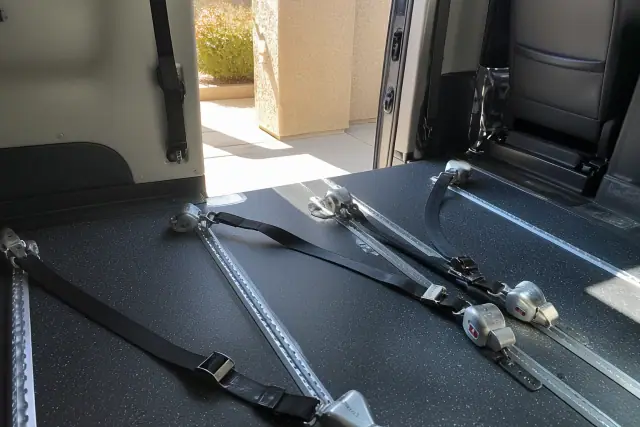
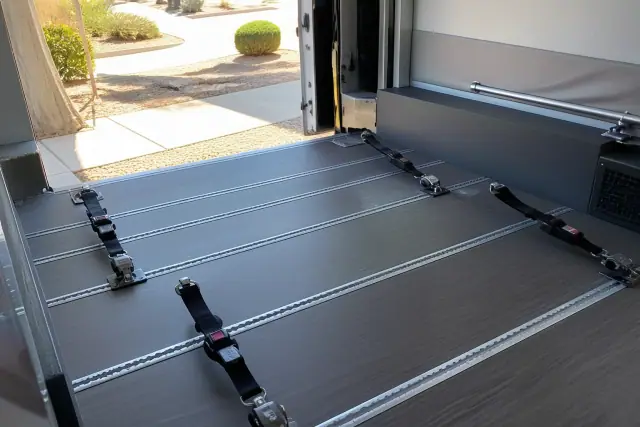
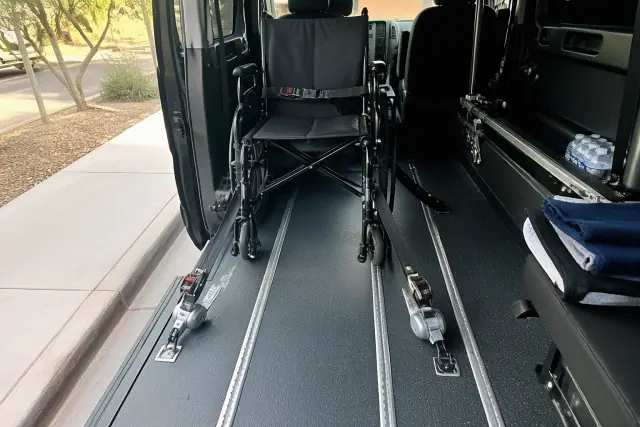
Wheelchair securement station with tie-down straps inside a transport vehicle in Gilbert, AZ.

Wheelchair vans use hydraulic lifts and four-point tie-down restraint systems for both manual and power chairs. Drivers check each restraint before the vehicle moves and are trained to load and unload at uneven driveways, apartment ramps, and clinic entrances.

Explore Service

Stretcher Transportation

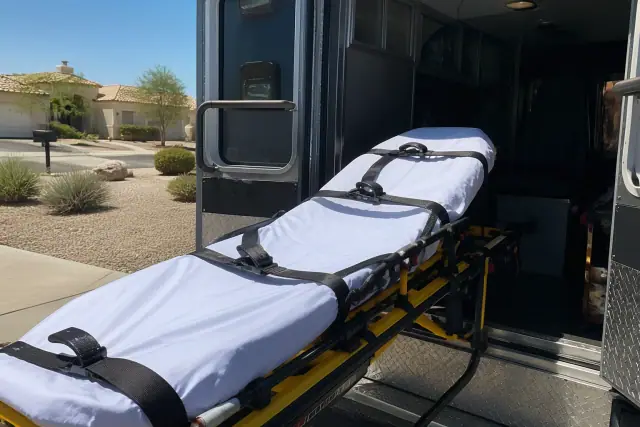
Stretcher loading procedure into a medical transport vehicle in Gilbert, AZ.

Stretcher-equipped vehicles serve passengers who cannot sit upright for a wheelchair transfer. Trained attendants support non-emergency hospital transfers, discharge rides for bedbound patients, and transportation between skilled nursing and outpatient surgical facilities.

Explore Service

Ambulatory Transportation

Ambulatory transportation vehicle with sliding doors open for boarding assistance in Gilbert, AZ.

Ambulatory transportation supports riders who can travel without a wheelchair or stretcher but still need help reaching care. Door-to-door assistance can include guidance between the residence, vehicle, and facility, plus help with bags or oxygen equipment when needed.

Explore Service

Bariatric Transportation

Wheelchair securement station with tie-down straps in a medical transport vehicle in Gilbert, AZ.

Bariatric-equipped vehicles use reinforced ramps, wider door frames, and higher weight-rated lift equipment than standard wheelchair vans. The service is designed to transport larger passengers safely and with dignity.

Dialysis Transportation

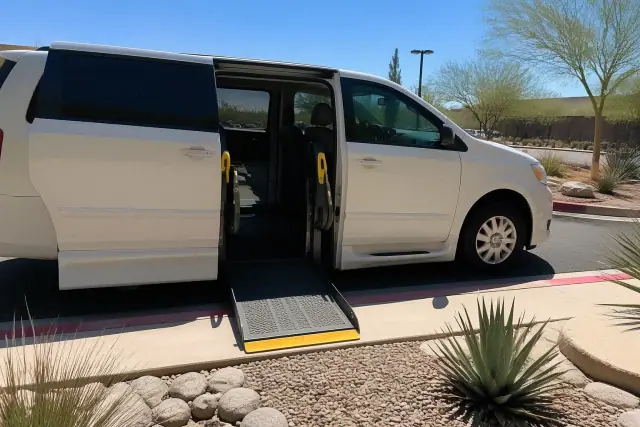
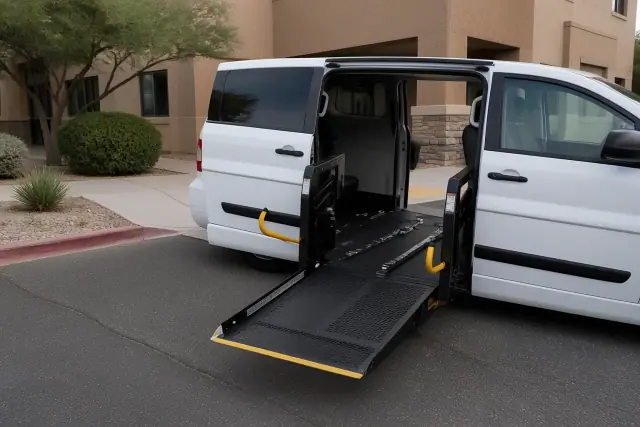
Wheelchair van with a lowered hydraulic lift parked at a dialysis clinic in Gilbert, AZ.

Dialysis patients commonly need three round trips each week for years at a time. Recurring schedules coordinate pickup times with clinic treatment slots so patients can plan their week around dependable transportation.

Medical Appointment Transportation

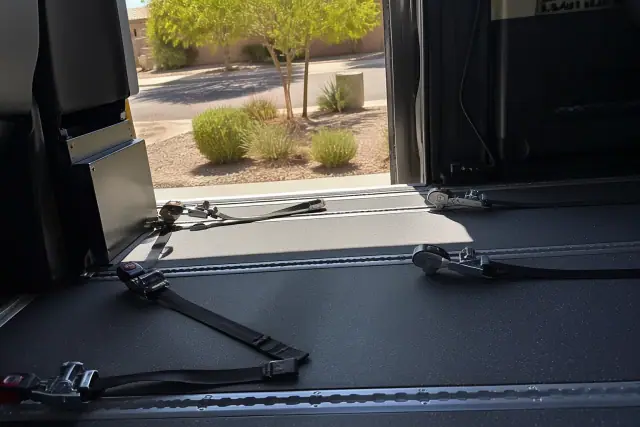
Four-point wheelchair tie-down straps installed in a medical transport vehicle in Gilbert, AZ.

Appointment rides are planned around pickup access, facility check-in time, treatment length, and the return trip. Drivers arrive with enough time for check-in, and return pickup coordination is confirmed before the appointment begins.

Hospital Discharge Transportation

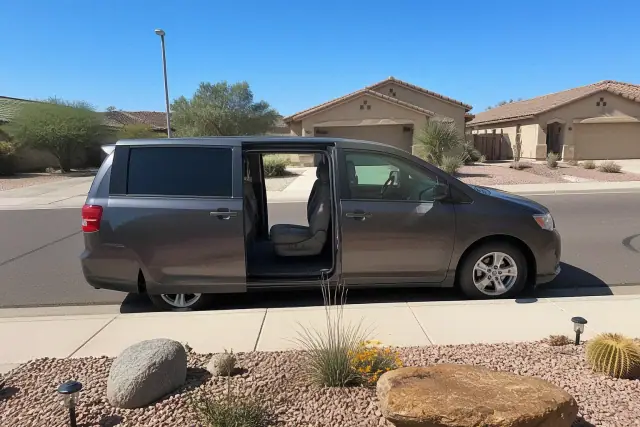
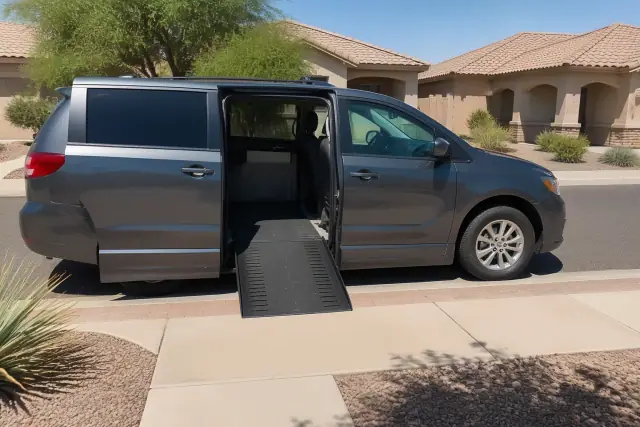
Medical transport vehicle with open side doors parked at a residential curb in Gilbert, AZ.

Hospital-to-home rides are coordinated with discharge planners so pickup can follow once paperwork clears. The goal is to reduce the extra waiting that can occur when a bedbound or mobility-limited patient has no suitable ride ready.

Senior Medical Transportation

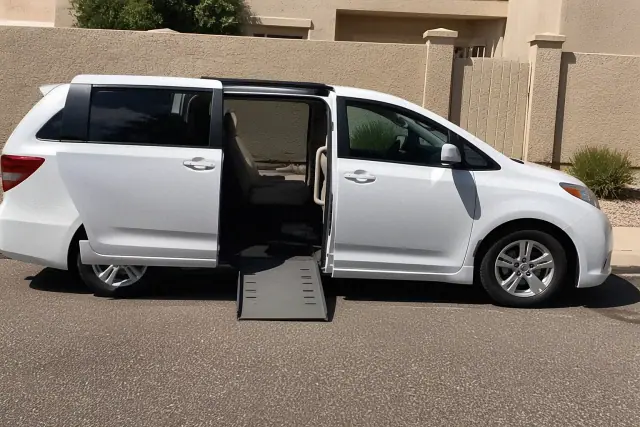
Medical transport vehicle with side doors open for boarding parked by a stucco wall in Gilbert, AZ.

Senior transportation includes more than the drive itself. Drivers provide door-to-door mobility help, can carry bags or oxygen equipment, and may wait during short appointments when that support is arranged in advance.

Door-to-Door Medical Transportation

Medical transport van parked curbside with open sliding doors for passenger assistance in a suburban Gilbert, AZ

The driver walks the passenger from the actual door to the vehicle and back again instead of leaving the rider at the curb. This support is especially useful for people using walkers, canes, or wheelchairs at long driveways and multi-step entries.

Long Distance Medical Transportation

Empty wheelchair secured with tie-down straps inside a medical transport van in Gilbert, AZ.

Long-distance rides connect Gilbert passengers with transplant follow-ups, cancer treatment, and rehabilitation outside the area, including Tucson and Flagstaff. The same restraint and monitoring standards used for local trips apply throughout the journey.

Choosing a Ride

How to Choose a Medical Ride in Gilbert

Start by matching the ride to the passenger's ability to sit upright, transfer, walk with assistance, or remain on a stretcher. Then compare the required vehicle equipment, pickup access, appointment timing, trip distance, privacy practices, and return-ride plan.

Mobility and Positioning Needs

Confirm whether the passenger can sit upright, uses a manual or power chair, needs ambulatory assistance, or must remain lying down. That decision determines whether a wheelchair van, ambulatory ride, or stretcher-equipped vehicle is appropriate.

Vehicle Securement Equipment

Ask how the provider loads and secures the passenger's mobility equipment. Hydraulic lifts, four-point wheelchair restraints, reinforced bariatric ramps, and equipment checks before movement should match the requested ride.

Scheduling Reliability

Recurring dialysis, hospital discharge, and specialty appointments each create different timing demands. Look for a scheduling process that coordinates clinic slots, confirms planned pickups, and clearly explains when same-day capacity is available.

Door-to-Door Assistance

Curbside service may not be enough for a rider facing a long driveway, ramp, or multi-step entrance. Clarify whether the driver assists from the actual door and can help with walkers, bags, or oxygen equipment.

Route and Facility Knowledge

Gilbert's growth into Arizona's fourth-most populous municipality has spread homes and clinics across a larger street grid. Drivers familiar with Gilbert Road, Val Vista Drive, San Tan Village, East Valley traffic, and facility entrances can plan more realistic pickup windows.

Privacy and Driver Training

Confirm that trip details are handled under HIPAA-compliant protocols and shared only with staff involved in the transportation. Drivers should be trained in passenger assistance, securement, defensive driving, and basic first aid before operating solo routes.

Gilbert Mobility Challenges

Common Medical Transportation Barriers in Gilbert

The national non-emergency medical transportation industry is valued near $150 billion a year because access to a suitable ride remains central to healthcare. In Gilbert, expanding distances, fixed public-ride limits, recurring treatments, variable discharge times, and inaccessible pickup points can all complicate a patient's trip.

Plan My Ride

Missed Medical Appointments

When a wheelchair user, senior, or medically fragile passenger cannot secure an appropriate ride, an important appointment may be delayed or missed. Matching the vehicle and pickup plan to the patient's actual needs reduces avoidable transportation gaps.

Recurring Dialysis Commitments

Dialysis schedules repeat frequently and late arrivals can carry medical risk. A recurring route tied directly to clinic treatment slots gives patients a stable weekly pickup and return plan.

Uncertain Discharge Timing

Hospital paperwork and room-release times do not always follow a precise schedule. Coordinating with the discharge planner helps position a wheelchair or stretcher vehicle when the patient is actually cleared to leave.

Challenging Home and Clinic Access

Uneven driveways, apartment ramps, long walks, multi-step entries, and unfamiliar clinic loading zones can make curb-to-curb transportation impractical. Door-to-door assistance gives the driver responsibility for the path between the entrance and vehicle.

Fixed Public Ride Limits

Valley Metro's RideChoice program offers wheelchair-accessible rides at $3 per trip up to eight miles, while ADA Dial-a-Ride complements local bus service. Zone limits, advance-booking windows, and shared-ride schedules may not fit every discharge, dialysis, or stretcher trip.

Distant Specialty Appointments

A trip from Gilbert to a central Phoenix medical facility can run roughly 25 to 30 miles depending on the destination. Transplant follow-ups, cancer treatment, and rehabilitation may require travel to Phoenix, Tucson, Flagstaff, or other facilities outside the East Valley.

Why Choose Us

Why Choose Our Gilbert Medical Transportation Team

Phoenix Non Emergency Medical Transport is a dedicated patient-transportation operation rather than a rideshare service with an accessibility option added on. The team combines Gilbert and East Valley route knowledge with trained drivers, trip-specific equipment, insured vehicles, scheduled maintenance, and secure handling of patient information.

Gilbert and East Valley Route Knowledge

Dispatchers plan around local patterns such as afternoon traffic near San Tan Village, school pickup on Gilbert Road, and different routes from Power Ranch to Chandler or downtown Phoenix. Drivers also know entry points at major medical facilities.

HIPAA-Compliant Trip Handling

Patient names, medical details, and appointment information are shared only with staff directly involved in the trip. Transportation documentation is stored securely instead of being passed along informally.

Insured and Maintained Vehicles

Vehicles are insured, kept on a set inspection schedule, and matched to the passenger's mobility and positioning needs. Wheelchair restraints are checked before movement, and specialized stretcher or bariatric equipment is assigned when required.

Simple Process

How Gilbert Medical Transportation Works

A clear ride plan begins with the passenger's mobility, pickup, destination, appointment, and return needs. Dispatch then assigns suitable equipment, confirms timing, and coordinates the trip from the passenger's door through the return pickup.

01.

Share the Ride Details

Provide the pickup address, medical destination, appointment time, return needs, mobility level, and any equipment that must travel with the passenger. These details also allow direct pricing based on the specific trip.

02.

Match the Vehicle and Equipment

Dispatch determines whether the trip requires ambulatory assistance, a wheelchair van, a stretcher-equipped vehicle, or bariatric equipment. The assigned setup must accommodate the passenger's position and mobility device.

03.

Confirm the Pickup Plan

Pickup time is coordinated with check-in or treatment slots, and recurring routes can be established once for ongoing care. Confirmation calls or texts are sent before scheduled trips.

04.

Complete Door-to-Door Pickup

The driver meets the passenger at the actual entrance, assists along the path to the vehicle, and helps with bags or oxygen equipment when needed. This avoids leaving mobility-limited riders to manage ramps, driveways, or steps alone.

05.

Secure and Transport the Passenger

Drivers load the passenger with the equipment assigned to the trip and check wheelchair restraints before the vehicle moves. During transport, staff follow HIPAA-compliant handling practices and established passenger-assistance procedures.

06.

Coordinate the Return Pickup

Return-trip details are confirmed before the appointment starts whenever possible. If the visit runs long or is rescheduled, the passenger or family can contact dispatch so the pickup plan can be adjusted.

Why Access Matters

Medical Ride Access by the Numbers

Case Study 1: Appointment Access: Roughly 6 percent of adults report missing medical appointments specifically because reliable transportation was unavailable.

Case Study 2: Recurring Care: Dialysis patients often need three round trips each week for years, making a repeatable schedule an important part of ongoing treatment access.

Case Study 3: Program Use: Medicaid NEMT research places average use at roughly 30 rides and about $517 per enrolled patient each year, while one missed appointment is estimated to waste $200 to $265 in clinical time and rescheduling.

Plan Your Ride

Schedule Your Gilbert
Medical Transportation
Ride

Share the passenger's mobility needs, pickup point, destination, appointment time, and return plan to receive trip-specific scheduling and cost information. Call to discuss a one-time ride, recurring dialysis transportation, hospital discharge, or long-distance medical appointment.

Gilbert Ride Questions

FAQs About Medical Transportation in Gilbert, AZ

These answers cover pricing factors, benefit eligibility, scheduling, mobility equipment, driver preparation, service areas, and trip coordination for Gilbert passengers.

Call About a Ride

Cost depends on trip distance, vehicle type, equipment needs, and whether the ride is one-time or recurring. Pricing is provided from the specific pickup, destination, and passenger requirements before booking.

Original Medicare Parts A and B generally do not cover routine rides to a doctor's office, although Part B may cover transportation when it is medically necessary, and some Medicare Advantage plans include NEMT benefits. Arizona Medicaid through AHCCCS covers qualifying non-emergency medical transportation, so eligibility should be checked for the specific member and trip.

Scheduling 24 to 48 hours ahead is recommended for guaranteed availability, especially when stretcher or bariatric equipment is required. Same-day requests are accepted when vehicle and driver capacity allows.

Wheelchair transportation is for passengers who can sit upright and ride in a secured wheelchair position. Stretcher transportation is for passengers who must remain lying down, including some post-surgical, bedbound, or facility-transfer patients.

Drivers complete training in passenger assistance, wheelchair and stretcher securement, safe transfers, defensive driving, and basic first aid before operating solo routes. They are also trained to recognize when a situation has moved beyond non-emergency care and emergency services should be contacted.

Yes. Long-distance trips can support transplant follow-ups, cancer treatment, and specialized rehabilitation in Phoenix, Tucson, Flagstaff, and other destinations outside the East Valley. Timing and pricing are discussed before the trip so the family can plan.

Contact dispatch as soon as the appointment timing changes so the return pickup can be adjusted. Buffer time is built into scheduled pickups because medical visits do not always end at the planned time.

Wheelchair vans use hydraulic lifts and four-point tie-down restraint systems for manual and power chairs. The driver checks each restraint before the vehicle begins moving.

The driver assists the passenger from the actual entrance to the vehicle and back again rather than providing only a curbside drop-off. Help can include navigating driveways, ramps, or steps and carrying bags or oxygen equipment.

Yes. Recurring dialysis routes can be established around the clinic's treatment slots, with confirmation calls or texts before each trip. This gives the patient a repeatable pickup and return schedule.

Bariatric-equipped vehicles use reinforced ramps, wider door frames, and higher weight-rated lift equipment than standard wheelchair vans. Dispatch should be told about the passenger's needs in advance so the appropriate vehicle can be assigned.

Dispatch coordinates pickup timing with the discharge planner and sends a wheelchair or stretcher vehicle based on the patient's needs. The ride can begin once paperwork clears and the patient is ready to leave.

Regular Gilbert pickup areas include the Heritage District, Val Vista Lakes, Power Ranch, Seville, Cooley Station, Layton Lakes, Morrison Ranch, and Higley. Regional service also reaches Chandler, Mesa, Queen Creek, Tempe, Phoenix, and San Tan Valley.

Drivers can provide door-to-door guidance for passengers who walk independently or use a cane or walker. They may also help carry bags or oxygen equipment and wait during a short appointment when arranged in advance.

Trips follow HIPAA-compliant protocols, and names, medical details, and appointment information are shared only with staff directly involved in the ride. Documentation is stored securely instead of being passed along informally.