Wheelchair Transportation
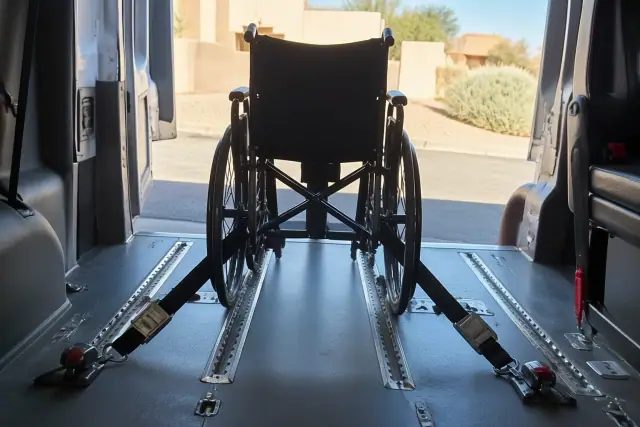
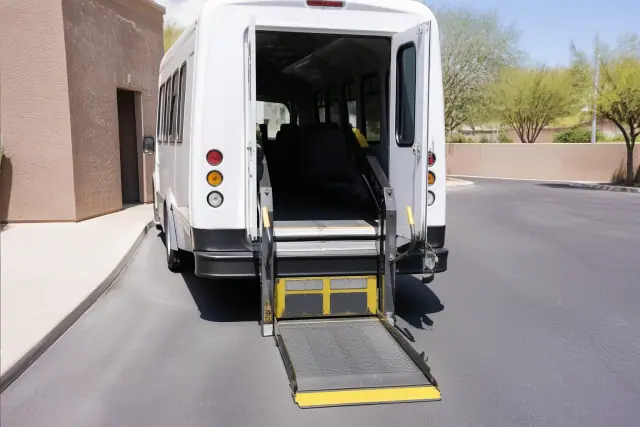
Hydraulic lifts and four-point tie-down systems secure manual and power chairs in accordance with ADA guidelines. Drivers are trained in safe transfers for riders who cannot self-transfer.
Explore Service
Phoenix Non Emergency Medical Transport provides wheelchair, stretcher, and ambulatory transportation for patients throughout Glendale, Arizona. Trips are also available for bariatric riders, recurring dialysis care, medical appointments, hospital discharges, seniors, door-to-door assistance, and long-distance transfers. Trained drivers use vehicles equipped for medical transport to help riders reach hospitals, dialysis centers, rehabilitation facilities, and other appointments across the West Valley.
Glendale's sprawling streets and summer temperatures above 110 degrees can make a missed or delayed ride especially risky for older adults and wheelchair users. We plan pickup timing around medical appointment windows and local traffic instead of treating the trip like a standard curbside ride. Drivers use proper lift-assist and securement techniques for each rider's mobility needs. Scheduled and same-day trips give families and facility teams practical options when transportation plans change.
Glendale's 248,325 residents are spread from Historic Catlin Court and Sahuaro Ranch to Arrowhead Ranch, State Farm Stadium, and Arrowhead Towne Center, so dependable routing matters for local and cross-city care.
Choose the trip format that matches the rider's mobility, transfer, equipment, and scheduling needs. Glendale trips can stay local or connect with specialists, dialysis centers, rehabilitation facilities, and hospitals across the Valley. Families coordinating medical travel in the East Valley can also review our Scottsdale, AZ service area.
Hydraulic lifts and four-point tie-down systems secure manual and power chairs in accordance with ADA guidelines. Drivers are trained in safe transfers for riders who cannot self-transfer.
Explore Service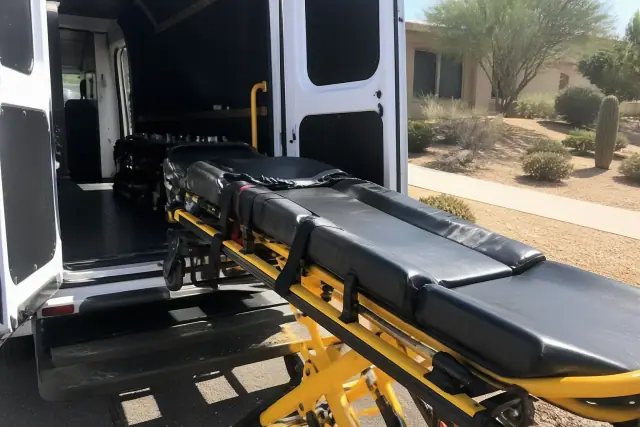
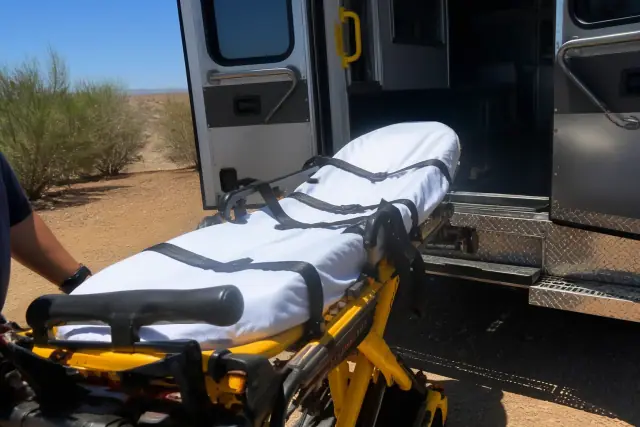
Secured stretcher vans support patients who cannot sit upright for a car ride. Two-person crews handle lift-assist and stair situations for home, appointment, and facility transfers.
Explore Service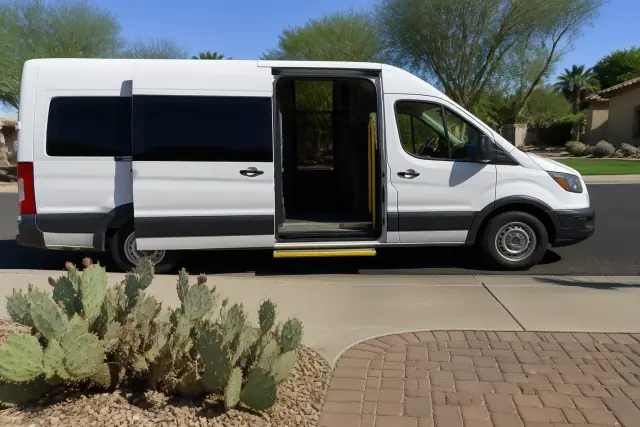
Patients who can walk with minimal assistance receive door-to-door support without relying on a standard rideshare pickup. The trip is planned around the medical appointment window.
Explore Service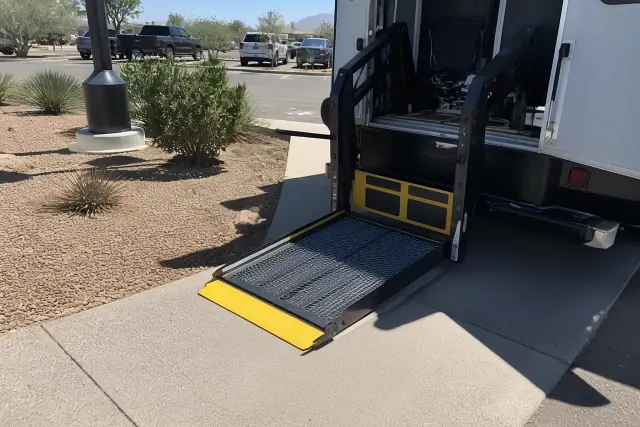
Bariatric-rated vehicles use reinforced ramps, wider doorways, and higher-capacity securement for larger patients. Matching the rider with correctly rated equipment protects both the patient and driver.
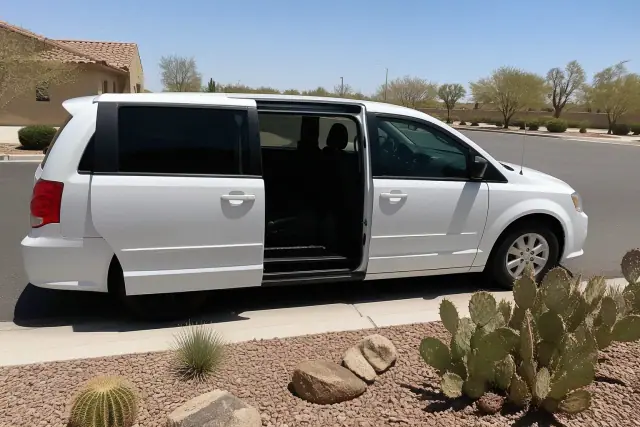
Recurring dialysis transportation can be scheduled three times a week for patients across Glendale. Consistent pickup planning helps reduce the risk of missed treatments.
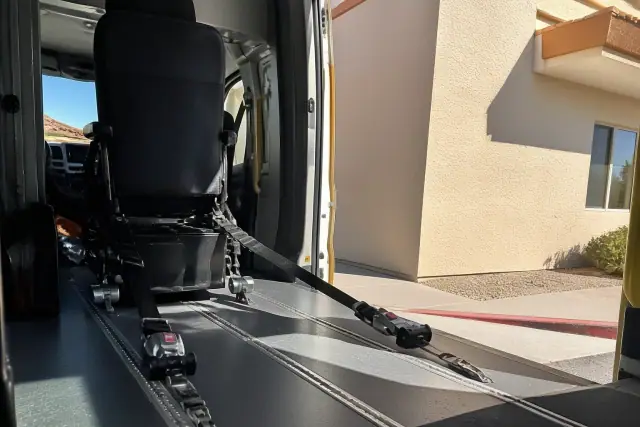
Rides are arranged for specialist visits, imaging appointments, routine physicals, dental care, and vision care. Scheduling accounts for the appointment window and Glendale traffic.
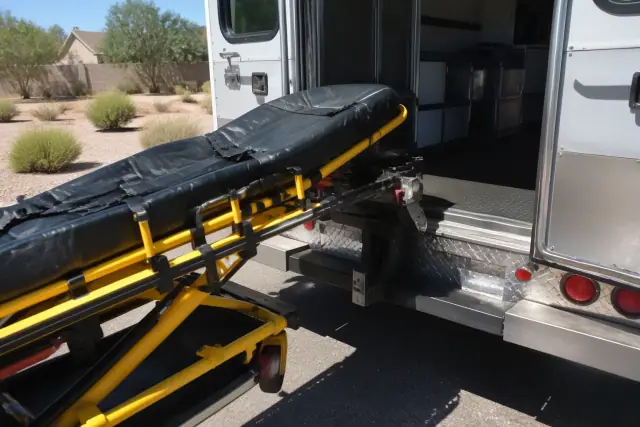
Families and discharge planners can coordinate same-day pickup when a patient is ready to leave a Valley hospital. The vehicle and assistance level are matched to the discharge needs.
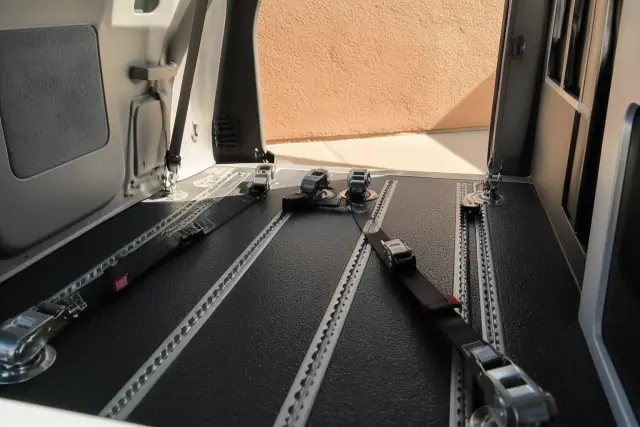
Older adults receive patient, unhurried service with lift-assist help at pickup and destination. Drivers allow extra time and communicate clearly with riders who have hearing or vision limitations.
Drivers escort patients from the door to the vehicle and from the vehicle into the facility lobby. This extra support is useful in gated communities and on larger medical campuses.
Long-distance transfers reach specialty centers in Tucson, Flagstaff, and out-of-state locations. Planned rest stops and the same securement approach used on local trips support a safer journey.
The right ride depends on the patient's mobility, transfer needs, equipment, appointment timing, and destination. Confirm those details before booking so the assigned driver and vehicle fit the trip.
Identify whether the rider is ambulatory, uses a manual or power chair, needs a stretcher, or requires bariatric-rated equipment. That choice determines the appropriate vehicle setup.
Ask whether the vehicle has the hydraulic lift, ramp rating, and floor-anchored securement needed for the mobility device. A standard vehicle may not safely accommodate specialized equipment.
Tell dispatch if the patient needs help from a bed, chair, doorway, stair, or facility entrance. Advance notice helps assign the correct crew and lift-assist approach.
Local Glendale appointments, cross-county transfers, and long-distance specialty trips require different timing and route plans. Include the full destination and any planned stops when requesting the ride.
Share the appointment time as well as the requested pickup window. Scheduling can then include transfer time, traffic, facility check-in, and return-trip coordination.
AHCCCS members with an approved medical need may qualify for transportation benefits, and some Medicare Advantage plans may include rides. Verify eligibility and authorization with the plan before booking.
Roughly 6 percent of adults nationally report that unreliable transportation has kept them from medical appointments, with a sharper impact among people with mobility disabilities. In Glendale, distance, heat, specialized equipment needs, and changing facility schedules can compound that problem.
Discuss My RideA late or missing ride can cause a patient to miss treatment or wait outside longer than is safe. Appointment-based scheduling gives dispatch a clear arrival target.
Extended curbside waits can be dangerous for older adults and wheelchair-dependent riders during Glendale summers. Pre-cooled climate control and coordinated boarding reduce unnecessary outdoor exposure.
Standard taxis and rideshare vehicles are not built for every wheelchair, stretcher, or bariatric need. Using correctly rated lifts, ramps, and securement reduces transfer and transport risk.
Some Glendale neighborhoods sit several miles from hospitals, dialysis centers, and specialists, and many appointments require crossing city lines. A planned medical ride can connect home, facility, and provider in one coordinated route.
Dialysis and other repeating treatments depend on consistent attendance. A recurring ride schedule helps families and facilities manage the same pickup and return needs across the week.
Hospital discharge timing can change with little notice, leaving families to find suitable transportation quickly. Direct coordination with discharge planners helps match the patient with the necessary vehicle and assistance.
A medical ride should combine trained patient handling, purpose-equipped vehicles, and familiarity with local care routes. Our licensed NEMT service uses insured drivers and coordinates with case managers, discharge planners, and home health agencies.
Drivers complete CPR and first aid training along with instruction in ADA-compliant securement, safe patient handling, and lift-assist techniques.
Medical transport vehicles include hydraulic or ramp-equipped access, floor-anchored securement, climate control, interior lighting, and non-slip flooring. Routine mechanical inspections follow Arizona Department of Transportation commercial vehicle requirements.
Drivers plan around clinics along 59th Avenue, dialysis centers near Bell Road, and Loop 101 congestion during stadium events. Familiarity with Arrowhead and Sahuaro Ranch helps improve routing and pickup timing.
Booking starts with the trip details and the patient's mobility needs. Dispatch then matches the ride with a trained driver, suitable vehicle, and timing plan for the appointment or transfer.
Provide the pickup location, destination, appointment time, requested pickup window, and contact information for the rider or facility.
Explain whether the patient needs wheelchair, stretcher, bariatric, ambulatory, or lift-assist service so dispatch can select the right setup.
The trip is confirmed with a driver trained for the service type and a vehicle appropriately sized and equipped for the patient.
The driver arrives ahead of the scheduled window, helps with the transfer, and supports the patient from the pickup door to the vehicle.
The wheelchair or stretcher is positioned and secured with the transport system rated for that equipment before the vehicle leaves.
Pickup and drop-off are documented when a facility requires confirmation. A family member or staff contact can call if the pickup time or destination changes.
Case Study 1: Continuity for chronic care: Recurring rides help patients stay connected with dialysis and cardiac care. Some Medicaid program reviews report more than $40 million in monthly savings for every 30,000 beneficiaries receiving transportation support for chronic conditions.
Case Study 2: Smoother hospital discharges: Coordination with discharge planners helps move a patient from the facility into a vehicle equipped for the required mobility and transfer support.
Case Study 3: Access to specialty care: Cross-city and long-distance transportation connects Glendale residents with providers elsewhere in the Valley, Tucson, Flagstaff, and beyond.
Tell us where the patient is going, when the appointment begins, and what mobility or transfer equipment is needed. We will confirm the trip details and match the request with an appropriate medical transport vehicle.
Find practical answers about wheelchair rides, stretcher service, recurring appointments, coverage, safety equipment, and service areas. Call with the patient's specific mobility and trip details for help choosing the appropriate option.
Call About a RideCost depends on distance, appointment frequency, wait time, and equipment such as lift-assist or bariatric access. Nationally, published Medicaid transportation data shows an average cost of roughly $517 per person per year across around 30 rides. Request trip-specific pricing because a short Glendale ride differs from a cross-county or long-distance transfer.
Provide the pickup location, destination, appointment time, preferred pickup window, and any mobility or equipment needs. Mention whether the rider uses a wheelchair, needs a stretcher, requires bariatric equipment, or needs lift assistance.
Yes. Wheelchair vans are equipped with hydraulic lifts and floor-anchored tie-down systems for manual and power chairs. Share the chair type and any transfer limitations when booking so the vehicle can be matched to the rider.
Stretcher service is intended for patients who cannot sit upright for a car ride. The patient travels flat and secured, with a crew available for lift-assist and stair situations between a home, appointment, or facility.
Yes. Recurring dialysis schedules help coordinate consistent pickups and return trips for repeated treatments. Provide the treatment days, appointment windows, facility, and mobility needs when setting up the schedule.
Same-day discharge pickups can be arranged when availability and the patient's equipment needs align. Families or discharge planners should call as soon as the release timing is known so dispatch can identify a suitable vehicle and driver.
The driver assists the patient from the pickup door to the vehicle and from the vehicle into the destination lobby. This is more support than a curbside drop-off and can help at gated communities or large medical campuses.
Bariatric-rated vehicles use reinforced ramps, wider doorways, and higher-capacity securement systems. Tell dispatch about the patient's needs before the trip so the vehicle is properly rated and configured.
Ambulatory transportation is for patients who can walk with minimal assistance but should not drive themselves. It provides appointment-focused, door-to-door support without requiring a wheelchair or stretcher vehicle.
AHCCCS members with an approved medical need may qualify for transportation benefits, and some Medicare Advantage plans may include ride coverage. Eligibility, authorization, and out-of-pocket responsibility depend on the individual plan, so confirm benefits before booking.
Glendale coverage includes Historic Catlin Court, Sahuaro Ranch, Arrowhead Ranch, Coyote Lakes, Arrowhead Towne Center, State Farm Stadium, and the Glendale Avenue corridor. Regular routes also reach Peoria, Sun City, Sun City West, Surprise, Youngtown, north Phoenix, Tolleson, Avondale, and the broader Maricopa County area.
Yes. Long-distance medical transportation is available for specialty care in Tucson, Flagstaff, and out-of-state facilities. The route can include planned rest stops while maintaining the securement standards used for local trips.
Drivers receive CPR, first aid, ADA-compliant securement, and safe patient-handling training. Vehicles and drivers operate under Arizona Department of Health Services licensing requirements and Arizona Department of Transportation registration and inspection requirements.
Yes. Lift-assist support is standard on senior and mobility-impaired trips and is included without an extra charge beyond the standard fare. Drivers also allow more time for boarding and communicate clearly with riders who have hearing or vision limitations.
A family member or facility staff member can call to update the pickup time or destination. Share the change as soon as possible so dispatch can adjust the route, appointment timing, and vehicle plan.