Proudly serving Phoenix, Mesa, Glendale, Scottsdale, Tempe, Chandler & surrounding areasCall or Text 24/7: 602-449-8153
Aerial view of Phoenix, AZ, showing desert foothills, saguaro cacti, and residential neighborhoods at sunset.

Medical Appointment Transportation in Phoenix, AZ: Scheduled Rides for Specialty Care & Therapy Sessions

Phoenix Non Emergency Medical Transport provides medical appointment transportation for patients throughout Phoenix and the surrounding metro area. We coordinate ambulatory, wheelchair, stretcher, bariatric, senior, and door-to-door rides based on each passenger's mobility needs. Our service supports doctor visits, dialysis, chemotherapy infusions, physical therapy series, outpatient procedures, and hospital discharges. Long-distance medical transportation is also available for specialty care outside the Valley.

Phoenix spans 517.9 square miles, with more than 1.6 million residents in a metro area of roughly 5.19 million people. Long routes, I-10, Loop 101, and Loop 202 traffic, and summer pavement temperatures that regularly push past 110 degrees can make an ordinary appointment difficult for someone with limited mobility. Our dispatch team plans pickup windows around actual appointment times and builds in realistic route buffers. Climate-controlled vehicles, mobility-specific equipment, and trained assistance help passengers travel without relying on curbside-only transportation.

Weekday and weekend transportation can be booked for one-time or recurring appointments, and same-day non-emergency requests are accommodated when vehicle availability allows. Drivers and attendants carry current CPR and First Aid certification and complete passenger-handling training for bariatric and non-ambulatory transfers.

Phoenix Non Emergency Medical Transport provides medical appointment transportation in Phoenix and the surrounding metro area, including Scottsdale, Mesa, Tempe, Gilbert, Chandler, Glendale, and Peoria.

★ ★ ★ ★ ★4.9/5 Average Rating · 20+ Years of Experience · Thousands of Customers Helped · Licensed & Insured · Patients, Families & Care Teams

Medical Appointment Transportation Options & Benefits

What Is Medical Appointment Transportation?

Non-emergency medical transportation, or NEMT, is scheduled travel for a stable patient who needs help reaching care but does not require a 911 ambulance. It can include ambulatory assistance, wheelchair van service, stretcher transport, or a vehicle equipped for bariatric needs.

Unlike an ambulance, scheduled patient transport is not intended for life-threatening emergencies or acute intervention. The vehicle, equipment, and level of assistance are selected before the trip according to whether the passenger can walk, uses a wheelchair, cannot sit upright, or travels with medical equipment.

Patients with mobility limitations, a recent hospital discharge, dialysis appointments, chemotherapy schedules, or post-surgical care needs may use this service. AHCCCS, Medicare, Medicaid, or private pay may apply depending on eligibility, the covered appointment, documentation, and authorization requirements.

Benefits of Scheduled Medical Transportation

A medical ride planned around the patient's mobility and appointment time can remove practical barriers between home and care. It also gives families a consistent option for one-time visits and treatment schedules that repeat week after week.

  • Pickup windows coordinated with actual appointment times
  • Standing schedules for recurring treatment rides
  • Door-to-door help from the home to the appointment desk
  • Wheelchair, stretcher, and bariatric equipment matched to the passenger
  • Four-point chair securement with a separate passenger restraint
  • Climate control suited to Arizona summer travel
  • Weekday and weekend booking across the Phoenix metro area
  • Support for walkers, portable oxygen, IV poles, and other travel equipment
Appointment Ride Services

Medical Appointment Transportation Services

Transportation is planned around the care being received as well as the passenger's mobility. That allows pickup timing, vehicle equipment, attendant support, and return-trip coordination to fit a routine office visit, a recurring treatment series, a hospital discharge, or an extended specialty-care route.

Doctor and Specialist Appointments

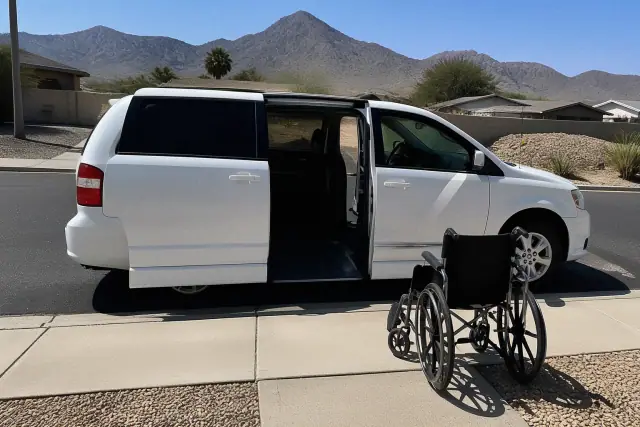
A vehicle with open sliding doors for medical transport on a street in Phoenix, AZ.

Pickup windows are coordinated around the actual appointment rather than a rough arrival estimate. Dispatch accounts for Phoenix-area traffic and the route between the patient's door and a primary care office, specialist, outpatient clinic, or medical facility.

Request Estimate

Recurring Dialysis Transportation

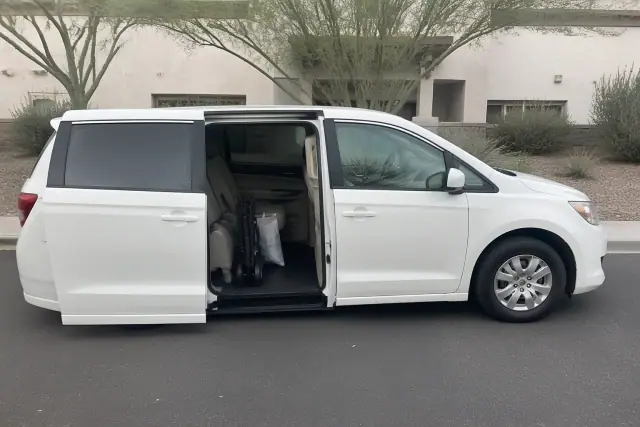
Medical transport vehicle with open side doors for passenger boarding at a curbside in Phoenix, AZ.

Dialysis patients typically need transportation three times a week, so rides can be placed on a standing schedule instead of rebooked before every treatment. Return pickups allow extra time for patients who feel fatigued, lightheaded, or hypotensive after dialysis.

Request Estimate

Chemotherapy and Infusion Rides

Medical transport van with open doors parked at a medical office in Phoenix, AZ.

Chemotherapy infusion schedules can be arranged as recurring transportation when a patient needs a consistent ride throughout a treatment series. The return trip is handled with attention to comfort, mobility assistance, and the pace the passenger can manage after the appointment.

Request Estimate

Physical Therapy Transportation

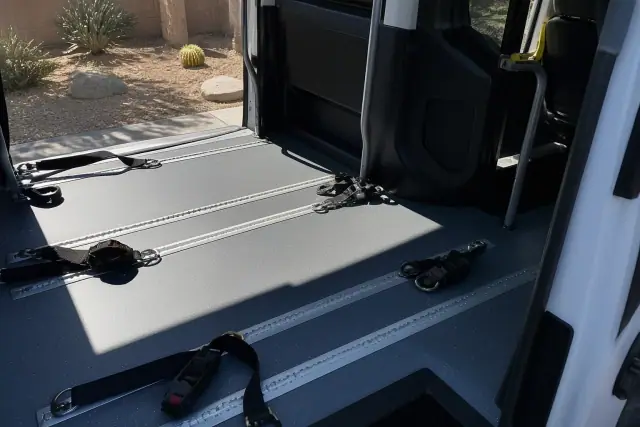
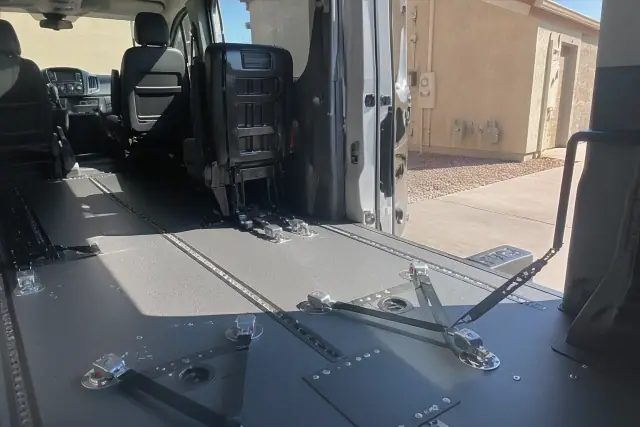
Interior of a medical transport van showing wheelchair tracks and tie-down straps in Phoenix, AZ.

A physical therapy series often involves repeated visits that need dependable pickup and return planning. Standing transportation can keep those appointments organized while matching the vehicle and assistance to walkers, wheelchairs, or other mobility limitations.

Request Estimate

Hospital Discharge Transportation

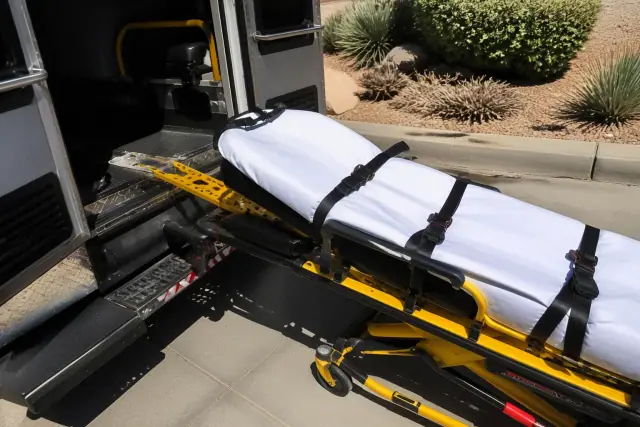
Stretcher secured at the rear doors of a medical transport vehicle during loading in Phoenix, AZ.

Discharge rides can be coordinated with hospital case managers and discharge planners before the patient is ready to leave. Walkers, wheelchairs, or oxygen tanks can travel with the patient and be positioned inside the home rather than left at the curb.

Request Estimate

Long-Distance Specialty Care Rides

Wheelchair securement station with tie-down straps inside a medical transport van in Phoenix, AZ.

Extended routes support patients traveling outside the Phoenix metro area for specialty care, including Tucson, roughly 120 miles south, and Flagstaff. Planning covers appointment timing, I-10 or I-17 traffic, climate-controlled travel, scheduled comfort stops, and whether a same-day return is realistic.

Request Estimate
Mobility and Assistance Options

Types of Medical Transport Options

The right transport option depends on the passenger's ability to walk, sit upright, transfer safely, and travel with mobility or medical equipment. Booking the appropriate assistance level in advance helps ensure the vehicle, restraint system, and trained staff are ready at pickup.

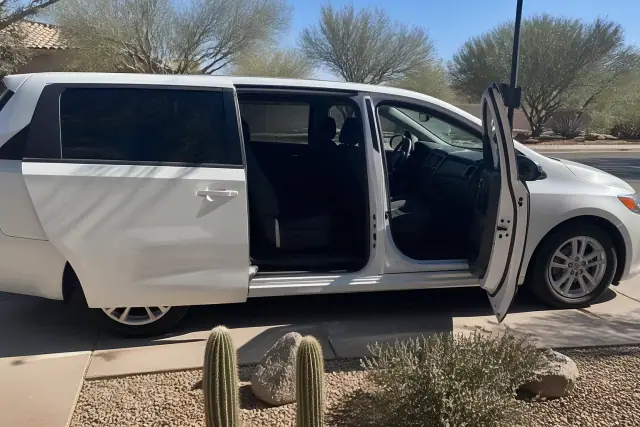
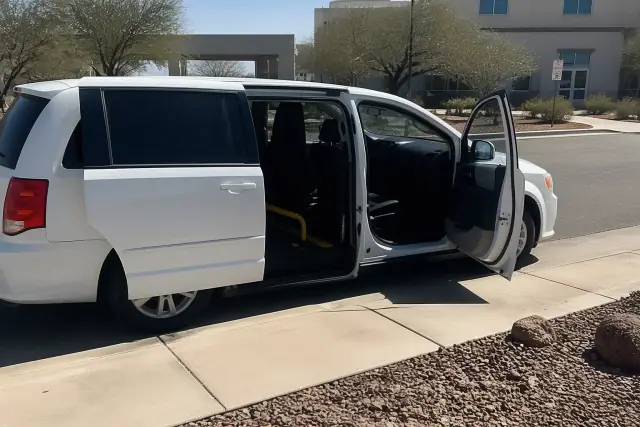
Ambulatory transport van with open side doors parked on a concrete curb in Phoenix, AZ with cacti and desert landscaping.

Ambulatory Transportation

Ambulatory transportation is suited to stable passengers who can walk with minimal assistance but should not manage the trip alone. It can accommodate a cane, walker, or steadying help between the home, vehicle, and appointment desk.

  • For passengers able to sit upright during travel
  • Assistance available for canes and walkers
  • Help through driveways, curbs, and clinic entrances
  • One-time or recurring appointment scheduling
  • A lower-equipment option than wheelchair or stretcher transport
Request Estimate
Wheelchair securement station with floor tracking and tie-down straps inside a vehicle in Phoenix, AZ.

Wheelchair Transportation

Wheelchair-accessible vehicles use hydraulic or ramp-style lifts with interior clearance for standard wheelchairs, heavy-duty chairs, power chairs, and scooters. Drivers follow trained loading, brake-engagement, transfer-angle, and communication steps throughout boarding and unloading.

  • Hydraulic or ramp-style wheelchair lifts
  • Clearance for power chairs and scooters
  • Floor-rail four-point tie-down system
  • Separate lap and shoulder passenger restraint
  • Securement approach aligned with WC19 crash-tested wheelchair transportation standards
Request Estimate
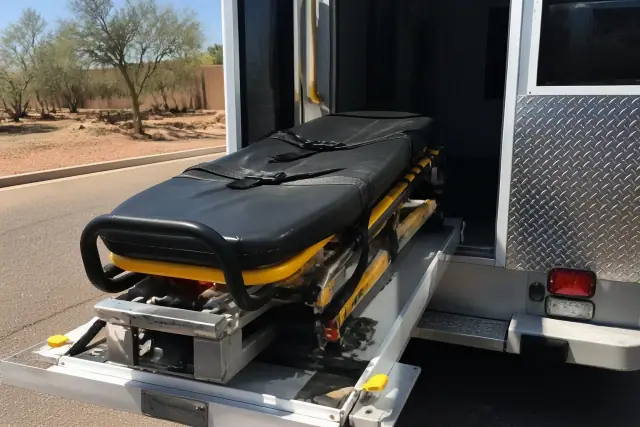
Stretcher loaded at the rear of a vehicle during a medical transport job in Phoenix, AZ.

Stretcher Transportation

Stretcher transport is intended for stable patients who cannot sit upright for the ride. Track-mounted cot systems load and lock without requiring staff to manually lift the patient's full weight.

  • Track-mounted stretcher loading and locking
  • Flat transport for documented spinal precautions
  • Elevated head positioning when confirmed for cardiac or respiratory needs
  • Positioning confirmed with the referring physician or discharging facility
  • Attendant checks of comfort, restraints, and traveling equipment
Request Estimate
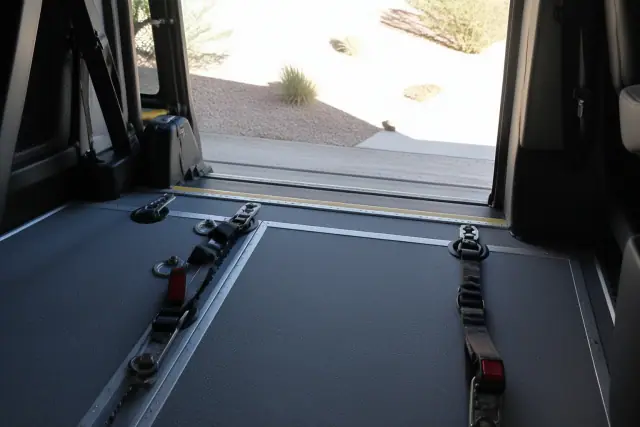
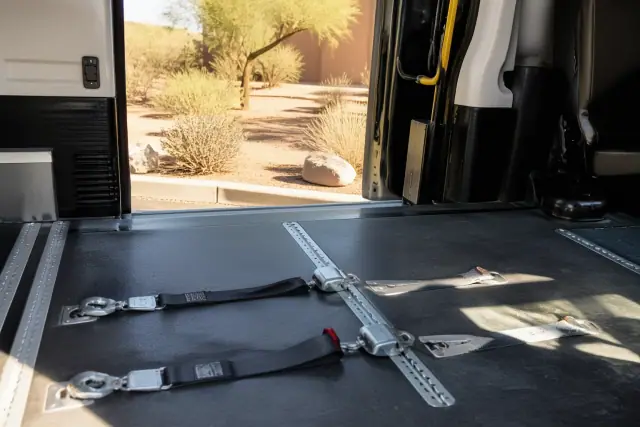
Wheelchair securement straps on a van floor with desert landscape visible through the door in Phoenix, AZ.

Bariatric Transportation

Bariatric transportation pairs a higher-capacity mobility setup with staff trained in bariatric and non-ambulatory passenger handling. The transport plan is based on the equipment and transfer assistance needed for a safe, dignified trip.

  • Equipment selected for higher weight capacities
  • Passenger-handling training specific to bariatric transfers
  • Hydraulic lift or track-mounted cot access as needed
  • Transfer planning before vehicle arrival
  • Calm communication during loading and unloading
Request Estimate
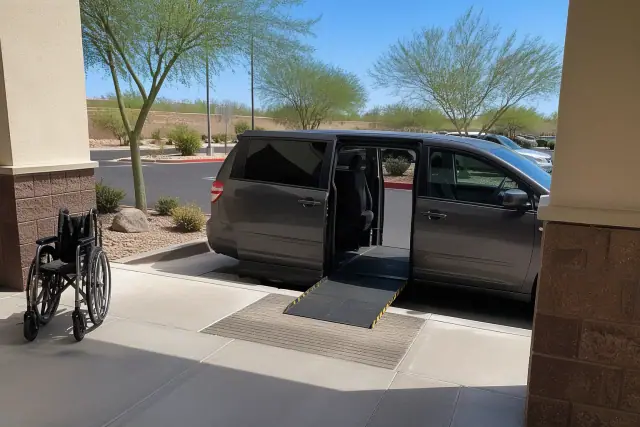
Van with open sliding door and ramp at a medical clinic entrance in Phoenix, AZ.

Door-to-Door Assistance

Door-to-door transportation begins at the passenger's actual door rather than the curb and continues into the destination building. This is useful for homes, apartments, assisted living communities, and medical facilities where the path includes steps, gravel, uneven sidewalks, or a long clinic entrance.

  • Pickup at a home, apartment, facility room, or assisted living community
  • Assistance between the door and vehicle
  • Walk-in support to the appointment desk
  • Gait belts and non-slip step assistance for senior passengers
  • Two-point contact during loading and unloading
Request Estimate
Finding the Right Fit

Choosing the Right Medical Transport Approach

Start with whether the passenger can walk, can sit upright, uses a wheelchair or scooter, needs a stretcher, or requires higher-capacity equipment. Also share any transfer limitations and traveling equipment, such as a walker, portable oxygen, IV pole, or multiple mobility aids. Those details help dispatch match the ride to the patient before pickup rather than trying to adapt at the door.

CPR and Passenger-Handling Training

Drivers and attendants carry current CPR and First Aid certification and complete hands-on passenger-handling training. That preparation covers wheelchair transfer technique, bariatric and non-ambulatory transfers, restraint security, passenger communication, and recognition of warning signs during a trip.

Mobility-Matched Vehicles

The fleet includes hydraulic wheelchair lifts or track-mounted stretcher systems, securement hardware, and climate control for Arizona conditions. Vehicles operate under Arizona Department of Transportation safety standards, and lift mechanisms and restraints are checked through routine maintenance.

Appointment-Timed Route Planning

Dispatch plans around appointment times, Phoenix traffic, mobility-aware loading, and the requested return trip. Standing schedules are available for recurring care, while same-day non-emergency transportation can be accommodated when an appropriate vehicle is available.

What Sets the Service Apart

Why Choose Us for Medical Appointment Transportation?

A medical ride should account for more than mileage. Our team coordinates the appointment window, selects mobility-appropriate equipment, assists beyond the curb, and plans the return around the passenger's condition after care. Reliable access matters: a missed regular appointment can lead to between $101 and $250 in downstream care costs, while national NEMT data for recurring conditions has associated access with more than $40 million in monthly Medicaid savings for every 30,000 beneficiaries served.

Request a Ride Estimate

Mobility Barriers

A standard car or rideshare may not accommodate a wheelchair, scooter, walker, oxygen tank, or the help needed to transfer safely. Accessible vehicles and trained assistance give passengers a transport option suited to the equipment and mobility limitations they already manage.

Recurring Treatment Schedules

Dialysis, chemotherapy, and physical therapy can require repeated trips on precise schedules. A standing ride schedule reduces weekly rebooking and helps patients arrive within the treatment center's appointment window.

Post-Treatment Fatigue

A patient's mobility and comfort can change after an appointment. Dialysis passengers, for example, may feel fatigued, lightheaded, or hypotensive, so the return pickup allows time to check in rather than assuming the patient can move at the morning trip's pace.

When a Patient Cannot Sit Upright

Some stable patients still cannot travel safely in a seated position because of their medical condition or precautions. Stretcher-equipped transport provides a track-mounted cot and positioning confirmed with the discharging facility or referring physician.

Unsafe Door-to-Curb Transfers

Curbside drop-off can leave a patient to manage steps, gravel, uneven sidewalks, parking lots, or clinic entrances alone. Door-to-door assistance continues between the passenger's door and the appointment desk, including non-slip step support and gait-belt assistance for older adults when needed.

Distant Specialty Care

The appropriate specialist is not always located in Phoenix, and a multi-hour medical trip requires more coordination than a local ride. Extended transport planning can include route buffers, position changes, restroom stops, destination timing, and a practical return schedule.

How It Works

Our Medical Appointment Transportation Process

Scheduling begins with the appointment and the patient's mobility needs, then continues through vehicle selection, route planning, assisted pickup, secure transport, and destination handoff. Return rides and future appointments can be coordinated during the same planning process.

01.

Share the Appointment Details

Provide the pickup address, destination, appointment time, desired return plan, and whether the trip is one-time or recurring. For covered transportation, also share the relevant authorization or referral information.

02.

Describe Mobility and Equipment Needs

Tell dispatch whether the passenger walks independently, uses a cane, walker, wheelchair, or scooter, needs a stretcher, or travels with oxygen or other equipment. These details determine the vehicle, securement, capacity, and attendant support required.

03.

Confirm Timing and Route

The pickup window is built around the appointment, expected loading assistance, and realistic Phoenix traffic. Extended trips also account for comfort stops and whether the patient will return the same day.

04.

Assist and Secure the Passenger

The driver or attendant helps the passenger from the door, loads the appropriate mobility equipment, and applies the required restraints. Wheelchairs are secured to the floor rail separately from the passenger's lap and shoulder restraint.

05.

Travel and Arrive with Assistance

During the ride, attendants check passenger comfort, restraint security, and traveling equipment. At the destination, assistance continues into the building rather than ending at the parking lot or curb.

06.

Coordinate the Return or Next Ride

The return pickup can account for how the patient feels after treatment and any added assistance needed. After a hospital discharge, a follow-up ride within a week or two can be scheduled at the same time, while repeated treatments can be placed on a standing schedule.

Plan Your Ride

Schedule Your Medical Appointment
Transportation

Share the appointment, mobility, equipment, and return-trip details so the appropriate transportation can be planned. Pricing is based on trip distance, vehicle type, time, and attendant needs, and a clear estimate is provided before booking.

Medical Ride Help

Medical Appointment Transportation FAQs

These answers cover pricing factors, mobility options, recurring rides, coverage, discharge coordination, and the details needed to schedule non-emergency medical transportation in Phoenix.

Call Our Dispatch Team

Pricing is generally based on trip distance, vehicle type, time, and attendant support rather than a single hourly rate. Ambulatory transportation usually costs less than a ride requiring a wheelchair lift or stretcher, while bariatric and long-distance trips require more specialized equipment or vehicle time. Phoenix Non Emergency Medical Transport provides an estimate before the ride is booked.

Available services include ambulatory, wheelchair, stretcher, bariatric, dialysis, senior, hospital discharge, door-to-door, and long-distance medical transportation. Rides can support doctor visits, outpatient procedures, chemotherapy infusions, physical therapy, and other scheduled non-emergency care. The vehicle and assistance level are matched to the patient's mobility needs.

The choice depends on mobility. Ambulatory transportation can suit a senior who walks with minimal help, wheelchair transportation fits a passenger using a chair or scooter, and stretcher transport is intended for a stable patient who cannot sit upright. Door-to-door assistance is available for the path between the home, vehicle, and appointment desk.

The wheelchair is attached to the vehicle's floor rail with a four-point tie-down system. A separate lap and shoulder restraint secures the passenger, so the chair and rider are restrained independently. The securement approach follows WC19 crash-tested wheelchair transportation standards.

Stretcher transportation is scheduled for a stable patient who cannot sit upright and needs appropriate positioning or equipment during a non-emergency trip. An ambulance is dispatched through 911 for a life-threatening emergency and carries paramedics equipped for acute intervention. If a patient's situation is an emergency, scheduled NEMT is not a substitute for 911.

Weekday and weekend transportation is available for one-time and recurring appointments. Same-day requests for urgent, non-emergency needs can be accommodated when a suitable vehicle is available. Share the patient's mobility and equipment needs when calling so availability can be checked for the correct transport type.

Yes. Dialysis transportation can be placed on a standing schedule for patients who typically travel to treatment three times a week. Return pickups can allow extra time for fatigue, lightheadedness, or hypotension after treatment.

The driver comes to the passenger's door rather than waiting at the curb and assists with the path to the vehicle. At the destination, assistance continues into the building or to the appointment desk. This can include help navigating steps, gravel driveways, uneven sidewalks, curbs, and clinic entrances.

Yes. Transportation can be coordinated with hospital case managers and discharge planners before the patient is ready to leave. New equipment such as a walker, wheelchair, or oxygen tank can travel with the patient, and a follow-up ride may be scheduled with the discharge trip.

AHCCCS covers transportation to and from covered medical and behavioral health appointments for eligible members when its requirements are met. The appointment generally must be a covered service, and prior authorization or a referral tied to that appointment may be required. Medicare, Medicaid, and private-pay arrangements have different eligibility and documentation rules.

Yes. Long-distance transportation is available for specialty care outside the metro area, including trips toward Tucson or Flagstaff. These rides are planned around appointment timing, traffic, climate-controlled comfort, scheduled stops, and whether the return can be completed the same day. Pricing is based on mileage and time rather than a flat local rate.

Walkers, wheelchairs, portable oxygen, oxygen tanks, and IV poles are among the equipment that may travel with a patient when the trip is arranged for them. Tell dispatch what equipment is coming so the correct vehicle, space, and securement can be planned. Attendants check equipment and restraint security during transport.

Have the pickup location, destination, appointment time, return plan, and whether the trip will repeat. Describe whether the passenger walks, uses a cane, walker, wheelchair, or scooter, cannot sit upright, needs bariatric equipment, or travels with oxygen or another device. If coverage is involved, include the available authorization or referral details.