Proudly serving Phoenix, Mesa, Glendale, Scottsdale, Tempe, Chandler & surrounding areasCall or Text 24/7: 602-449-8153
Guides

When does Medicare cover non-emergency medical transportation?

Phoenix Non Emergency Medical Transport hears this question daily from families across Maricopa County arranging dialysis, discharge, and specialist trips. Medicare pays for nonemergency medical transportation only in limited, medically necessary situations, so coverage depends on the transport type and health need. This guide explains how Original Medicare, Medicare Advantage, AHCCCS, and private-pay options differ.

Quick Summary

  • Original Medicare rarely pays for routine appointment rides; Part B may cover non-emergency ambulance transportation when other travel would endanger the patient's health.
  • A physician's written order, often called a Certificate of Medical Necessity, is required before Medicare will consider a non-emergency ambulance claim.
  • Medicare Advantage plans may offer limited rides to provider or dialysis visits, and people with both Medicare and AHCCCS may qualify for Medicaid-funded transportation.
  • Private wheelchair, ambulatory, and rideshare trips generally fall outside Original Medicare; families may need to use other plan benefits or private pay.

How Medicare Transportation Coverage Works

Original Medicare Limits

Original Medicare does not treat routine rides to medical appointments as a standard benefit. Part B may cover non-emergency ambulance transport when the patient's condition makes travel by car, taxi, or wheelchair van unsafe.

Medical Necessity Rules

A physician must document why another form of transportation could endanger the patient. Bed confinement, a need for oxygen during the ride, or injury risk during transfer are factors reviewers consider.

Check Plan Benefits

Medicare Advantage (Part C) plans may include limited nonemergency transportation that Original Medicare does not. Arizona residents with both Medicare and AHCCCS may also qualify for Medicaid-funded transportation.

Transportation Coverage Scenarios

Ambulance-Level Medical Necessity

Interior of an ambulance patient compartment with medical equipment in Phoenix, AZ.

A non-emergency ambulance transporting a patient who cannot safely travel by car or wheelchair van. This is the narrow situation Original Medicare may cover.

Wheelchair Van and Ambulatory Rides

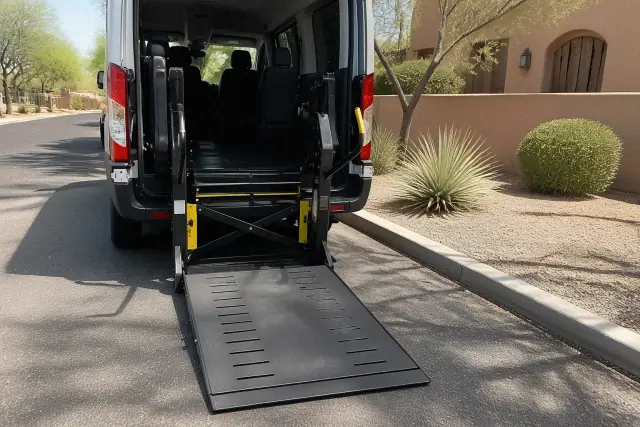
Automated hydraulic wheelchair ramp lowered to the ground at a stucco building in Phoenix, AZ.

Compare a wheelchair-accessible van with an ambulance to make the coverage distinction clear. Routine door-to-door and ambulatory rides are outside Original Medicare's ambulance rules.

Physician Order and Coverage Review

Documentation and radio equipment on a vehicle dashboard in Phoenix, AZ with desert landscaping visible through the window.

A physician's written order beside plan documents before transportation is scheduled. Documentation and timing matter because after-the-fact claims are routinely denied.

Medicare Coverage Snapshot

Original Medicare Part B

After the annual Part B deductible is met, Medicare typically pays 80% of the Medicare-approved amount for qualifying ambulance transport, leaving 20% coinsurance.

Medicare Advantage Plans

Some plans offer a limited number or type of rides to dialysis or provider visits. Benefits, transportation partners, and eligibility vary by plan.

Medicare and AHCCCS

People who are eligible for both programs may qualify for free or low-cost nonemergency transportation through Medicaid coordination even when Medicare denies the ride.

Private-Pay Phoenix Trips

Private nonemergency medical transportation in Phoenix typically runs $60-$150 for a one-way trip, depending on vehicle type and distance.

Medicare Transportation Planning Matrix

Match the Ride to the Coverage Path

Trip or NeedOriginal Medicare PositionPractical Action
Non-emergency ambulancePart B may cover it when other transportation would endanger the patient's health.Obtain the physician's written order before the trip.
Routine wheelchair or ambulatory rideIt falls outside the Original Medicare ambulance benefit.Check Medicare Advantage, AHCCCS, or private-pay options.
Routine dialysis tripOriginal Medicare does not cover the ride as a routine benefit.Ask the health plan about recurring transportation benefits.
Hospital discharge to homeIt may qualify only when ambulance-level care is medically necessary.Verify coverage with the case manager before discharge.
Hospital-to-rehab transferPart A or Part B ambulance rules may apply when medical necessity is documented.Confirm the transfer and coverage requirements before release.

What Medicare Coverage Means

Original Medicare is not a general ride benefit. Part A addresses qualifying transfers connected to inpatient care, while Part B handles medically necessary ambulance transport to the nearest appropriate facility. Routine wheelchair van, ambulatory, bariatric, and most long-distance trips remain separate unless another health plan provides a transportation benefit.

Factors That Change the Answer

The decision turns on physician documentation, whether the patient can sit or travel safely, any need for oxygen or monitoring, and the required vehicle. Stretcher transport may qualify only when the patient cannot sit upright safely, while specialized wheelchair or bariatric vehicles are not distinct Original Medicare benefit categories. Plan rules determine whether Medicare Advantage or AHCCCS can cover a Phoenix-area ride.

Common Follow-Up Questions

Original Medicare does not normally cover a wheelchair van, a routine dialysis trip needed multiple times weekly, or a hospital discharge ride home. A hospital-to-rehab transfer may qualify when medical necessity and ambulance-level care are documented, while long-distance trips to specialty care are rarely covered. Ask the physician and health plan what documentation and provider rules apply before the ride.

Plan Your Ride

Need Help Planning Your Ride?

Check plan benefits and physician documentation before booking. The Phoenix-based team can explain private wheelchair, ambulatory, stretcher, bariatric, hospital-discharge, dialysis, and long-distance transportation options when Medicare does not apply.