Accessible Vehicle Match
Ramp vans work well for many manual or lighter powered chairs on flat ground. A hydraulic or electric platform lift may be a better match for a heavier powered chair or a pickup area with a curb or slope.
At Phoenix Non Emergency Medical Transport, safe wheelchair transportation starts by matching the vehicle, boarding equipment, securement, and hands-on assistance to the passenger and chair. A ramp- or lift-equipped vehicle, four-point chair securement, and a separate lap-and-shoulder belt are used to restrain the chair and rider independently during the trip.
Ramp vans work well for many manual or lighter powered chairs on flat ground. A hydraulic or electric platform lift may be a better match for a heavier powered chair or a pickup area with a curb or slope.
Tension four straps at approved points on the wheelchair frame, then buckle a separate lap-and-shoulder belt for the passenger. The chair and occupant restraint systems serve different purposes and both must be in place before travel.
Before dispatch, confirm the chair type, turning radius, weight, battery placement, and whether the passenger can transfer or sit upright. Also share whether the ride is for dialysis, a hospital discharge, imaging, a specialist follow-up, or a long-distance transfer.
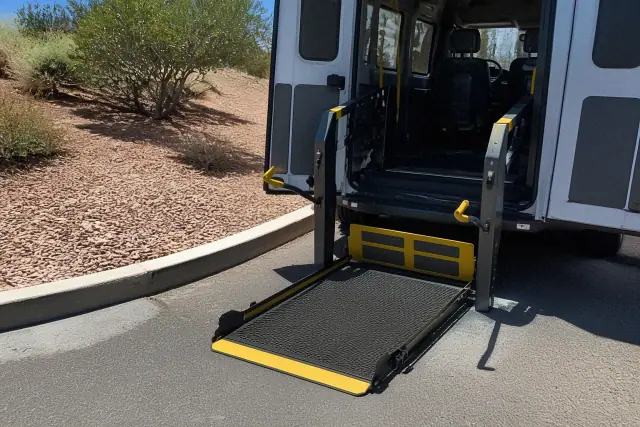
A side- or rear-entry ramp can suit a manual or lighter powered wheelchair when the loading surface is level. Straight alignment helps the chair enter the securement bay safely.
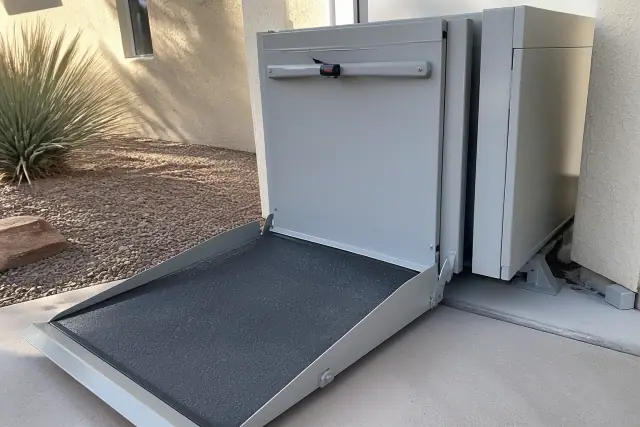
A hydraulic or electric platform lift can handle a heavier powered chair or a loading area with a curb or slope. Chair weight and platform capacity must be confirmed before boarding.
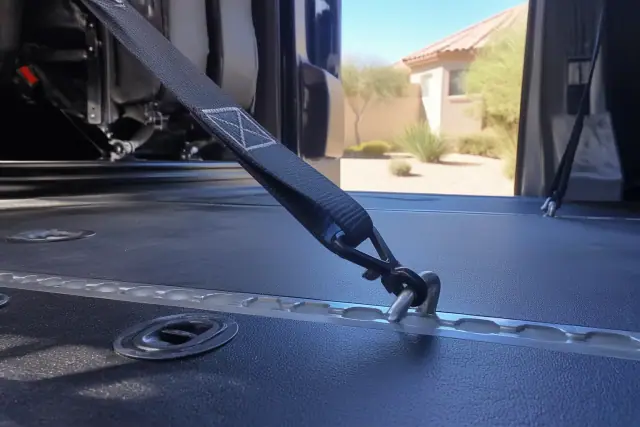
The chair should show four straps anchored to its frame, with a separate lap-and-shoulder belt fitted to the rider. Both restraint systems are checked independently before the vehicle moves.
Identify whether the wheelchair is manual, folding, electric, or powered. Turning radius, weight, battery placement, and the vehicle floor rating affect how the chair can be loaded.
Two main vehicle setups handle boarding: fold-out or slide-out ramps and hydraulic or electric platform lifts. The chair's weight and the pickup surface determine which setup fits the trip.
A passenger who can maintain trunk control and transfer independently may need less hands-on assistance. Someone who cannot sit upright or hold their posture generally needs stretcher transportation instead.
Lock the brakes, check the ramp or lift angle, guide the chair on straight, and tension every securement strap before moving. Skipping a step increases the risk of a tip-over during transit.
| Passenger or Chair Situation | Vehicle or Method | Key Check |
|---|---|---|
| Manual or folding chair; passenger can sit upright | Ramp-equipped van | Use level access, lock the brakes, and guide the chair straight into the securement bay. |
| Heavy powered chair or curb or slope at pickup | Lift-equipped van | Confirm chair weight, turning radius, battery placement, and platform capacity. |
| Passenger cannot sit upright or hold posture | Stretcher transportation | Explain transfer and assistance needs when booking. |
| Higher weight capacity or wider chair | Bariatric transportation | Confirm a reinforced ramp or floor and a wider securement bay. |
| Trip outside the Phoenix metro area | Long-distance medical transportation | Plan for fuel, rest stops, and whether a second attendant is needed. |
Boarding follows a clear order: confirm the passenger and chair, check the ramp or lift angle, lock the brakes, guide the chair straight into the bay, tension the chair straps, and buckle the separate occupant belt. This sequence applies whether the ride is a routine appointment, recurring dialysis trip, hospital discharge, or specialist follow-up.
The method changes with four factors: securement equipment, patient mobility level, chair type, and distance. In the Phoenix metro area, which spans 517.9 square miles and is home to more than 1.6 million residents, trip distance can affect timing and vehicle planning; travel to Tucson or Flagstaff may also require fuel planning, rest stops, and sometimes a second attendant. Higher-capacity bariatric trips need reinforced equipment and a wider securement bay, while private wheelchair-accessible vans can support same-day, door-to-door pickup and shared ADA services may require advance scheduling.
Common follow-ups include cost, coverage, companion travel, and when to switch from wheelchair to stretcher transport. Accessible medical transport generally costs $45-$115 per trip during standard business hours, with evening, weekend, holiday, bariatric, and long-distance trips running higher. Medicare Part B covers non-emergency medical transport only when it is medically necessary and ordered in writing by a physician, while AHCCCS covers NEMT more broadly for eligible members. Ask about mileage rates, wait-time charges, and whether a companion can ride at no extra cost, and request stretcher transportation when the passenger cannot sit upright or hold their posture.
Share the passenger's chair type, ability to transfer or sit upright, pickup access, destination, timing, and trip distance. The local team can confirm whether a ramp van, lift-equipped vehicle, stretcher, bariatric equipment, or long-distance planning fits the ride; trips use licensed drivers, insured vehicles, and equipment matched to the passenger's mobility level.