Match the Ride to Mobility Needs
Start with the rider's ability to walk, remain seated, transfer safely, and use mobility equipment. Those needs determine whether ambulatory, wheelchair, stretcher, or bariatric transportation is appropriate.
Phoenix Non Emergency Medical Transport provides ten non-emergency options across the Salt River Valley: wheelchair, stretcher, ambulatory, bariatric, dialysis, medical-appointment, hospital-discharge, senior, door-to-door, and long-distance transportation. The right choice depends on whether the rider can walk, remain seated in a wheelchair, needs a stretcher, or requires higher-capacity equipment; every option is for a scheduled, medically stable trip rather than an emergency.
Start with the rider's ability to walk, remain seated, transfer safely, and use mobility equipment. Those needs determine whether ambulatory, wheelchair, stretcher, or bariatric transportation is appropriate.
Appointment time, pickup window, transfer pace, trip distance, and Phoenix traffic all shape scheduling. Routes around Loop 101, Loop 202, and I-17 may need extra buffer time, especially when monsoon weather affects travel.
Provide the pickup address, destination, appointment time, mobility needs, and any walker or portable oxygen that will travel with the rider. Also confirm whether the trip is private pay or must be arranged through a health-plan transportation broker.
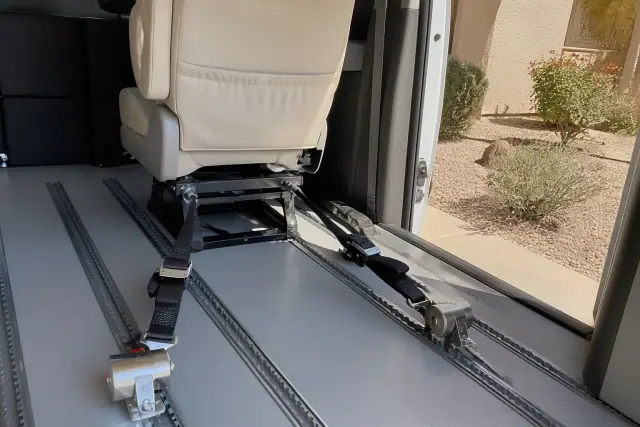
A lift-equipped van can accommodate a manual or power wheelchair without requiring the rider to transfer out of the chair. Four-point securement keeps the wheelchair positioned during transport.
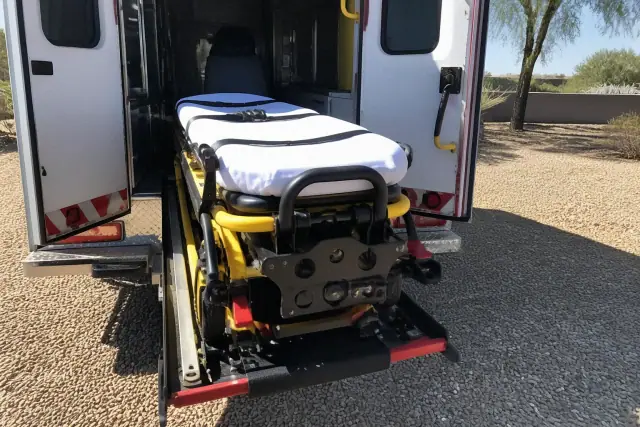
Stretcher service uses a padded gurney and safety harnessing, while bariatric service adds reinforced ramps, wider gurneys, and higher-capacity lifts. Those equipment differences require vehicles beyond a standard wheelchair van.
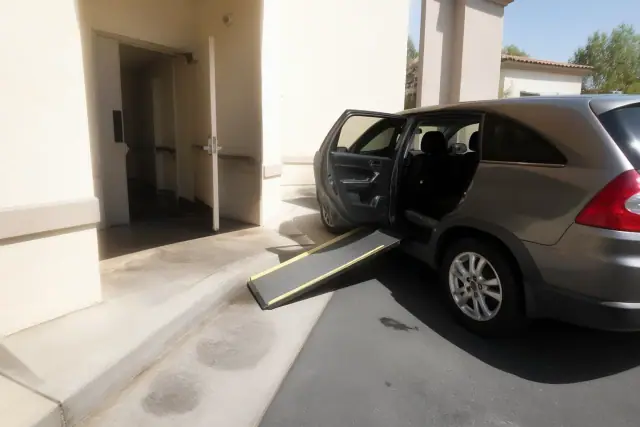
Door-to-door assistance covers the path from a home or apartment entrance into the vehicle and from the vehicle into a clinic lobby or exam room. It provides more support than curbside pickup and drop-off.
Ambulatory service fits riders who can walk with minimal help; wheelchair, stretcher, and bariatric services add progressively different securement, loading, and capacity requirements.
Dialysis treatment is typically three to four hours long and occurs three times weekly, so standing pickup and return windows should follow clinic timing.
Senior transportation supports Phoenix's growing 65-plus population with a slower transfer pace, mobility assistance, fall-prevention awareness, and climate-controlled vehicles.
Local scheduling spans a 517.9-square-mile service area, while advance-booked long-distance trips can reach Tucson, Flagstaff, or out-of-state specialty hospitals.
| Service | Best Fit | Equipment or Assistance |
|---|---|---|
| Ambulatory | Riders who can walk with minimal help | Assisted travel after visits, procedures, or sedation |
| Wheelchair | Manual or power wheelchair users | Ramp or lift access with four-point securement |
| Stretcher | Patients who cannot sit upright | Padded gurney, safety harnessing, and loading staff |
| Bariatric | Riders needing higher-capacity equipment | Reinforced ramps, wider gurneys, and higher-capacity lifts |
| Dialysis | Recurring clinic trips | Pickup windows coordinated around treatment times |
| Medical appointment and senior | Routine visits with mobility support | Extra transfer time and patient-handling assistance |
| Hospital discharge and door-to-door | Facility-to-home or entrance-to-exam-room trips | Assistance beyond curbside pickup and drop-off |
| Long distance | Specialty care beyond the Phoenix metro | Advance scheduling based on mileage and vehicle type |
Patients who can walk with minimal help can use ambulatory transportation, while manual or power wheelchair users can remain in their chairs in lift-equipped vans. People who cannot sit upright may need padded-gurney stretcher service, and larger patients may require bariatric vehicles with reinforced ramps, wider gurneys, and higher-capacity lifts. Dialysis, medical-appointment, hospital-discharge, senior, door-to-door, and long-distance transportation organize those mobility options around the purpose and distance of the trip. Staff can also handle walkers or portable oxygen during the ride.
The safest service choice begins with mobility level, transfer needs, equipment, medical stability, and whether the trip is one-way or recurring. In a city of over 1.6 million residents within a metro near 5.19 million, appointment time, trip distance, and vehicle availability also affect pickup planning. Phoenix summer temperatures regularly exceed 100 degrees, making climate control and reduced outdoor waiting especially important. Because one missed appointment can cost a provider between $101 and $250 in lost scheduling capacity, buffer time and direct delay communication matter.
Private-pay rates in Arizona typically run $25-$45 for ambulatory transport, $65-$115 for wheelchair transport, and $300-$525 for stretcher transport, with distance and time of day affecting the total; bariatric and long-distance trips are priced by equipment needs and mileage. Qualifying AHCCCS members may need to arrange covered rides through their health plan's transportation broker. Routine transportation works best when booked at least a few days ahead, while same-day availability depends on the fleet and hospital discharges may require shorter notice. Wheelchair riders remain in their chairs with securement, whereas stretcher riders use a gurney and harnessing. For acute distress or any need for medical intervention en route, call 911 instead of requesting non-emergency transportation.
Share the pickup address, destination, appointment time, mobility level, and equipment needs. For recurring care or a hospital discharge, a family member or case manager can also ask about pickup windows, return timing, and status updates.